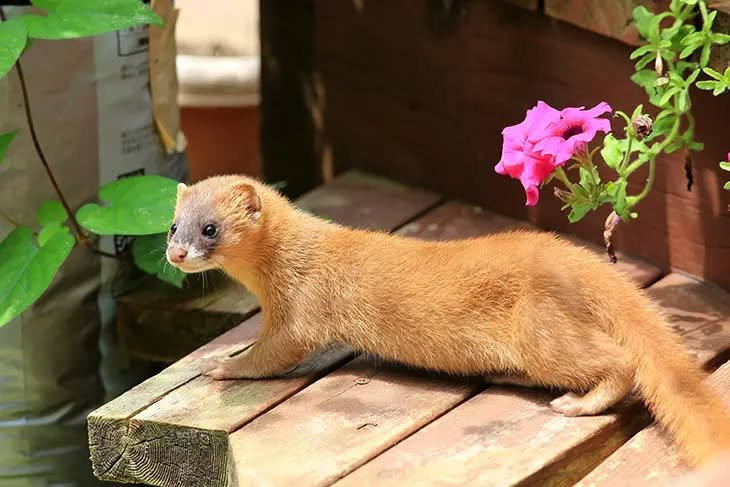
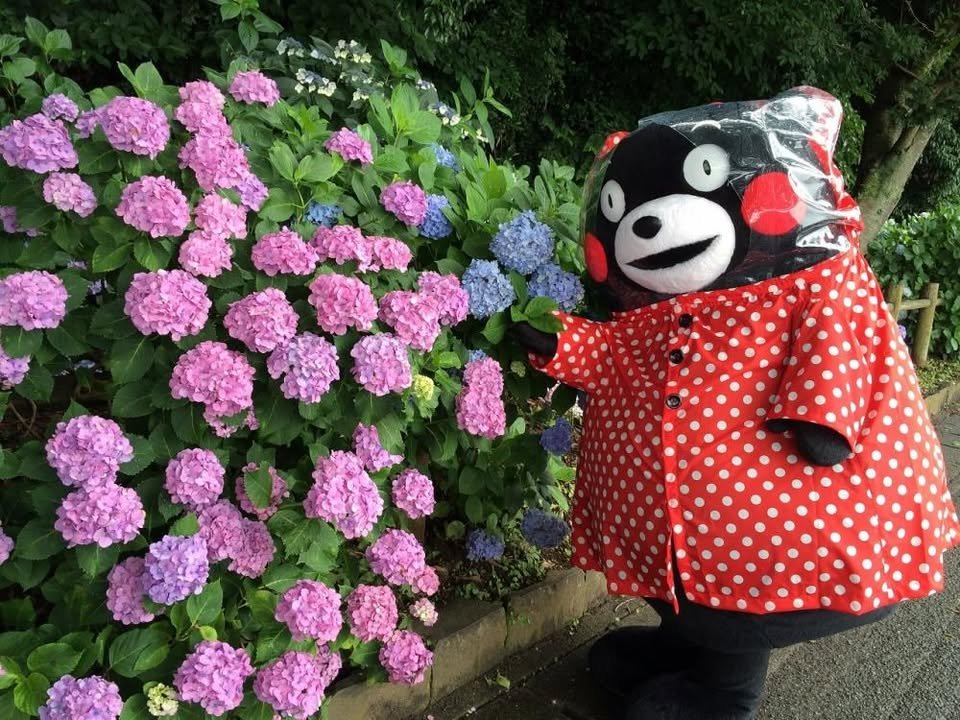
Kirk here with more information for cat lovers. Last night I posted about how yesterday's 2022/2/22 reminds Japanese people of cats because of all the "n" sounds in 2 (ni) and the idea that cats say "nya." Well, Liz kindly responded with information about a "Winter Cat Festival" at Tsuruya. Here's what she wrote: "There is also a 'Cat Festa' event till the 27th on the basement floor of TSUTAYA downtown. A portion of the proceeds go to medical care for the stray(?) cats (on Nekojima in Amakusa , if I am mistaken please correct me). All kinds of catty things , from pottery to postcards, eco bags , etc."
https://www.tsuruya-dept.co.jp/saiji/nekofes/index.html

2022-02-23 11:34 JST

Kirk here with some observations about the date 2022/2/22 (yesterday). National Public Radio in the U.S. referred to it as Twosday. That makes sense in English but in Japanese, the number 2 is "ni," which is kinda similar to "nya," which is what Japanese-speaking cats say. So, Tuesday was cat day. Several local news programs I saw shared cat-related stories.
TKU aired this story about Catton in Arao that takes care of homeless cats until a suitable home (yours?) can be found:
https://www.fnn.jp/articles/-/319540
And, since this is the internet and the topics is cats, here's a compilation of cut cat videos from your viewing pleasure:
https://www.facebook.com/watch/?v=1673352106012921

2022-02-23 01:38 JST

William Huy Tran says that everything must go. This would be a good chance for a budding English school owner. ("No price is too high" - ha ha!)

2022-02-22 19:22 JST

William TSMC, the Taiwanese semiconductor manufacturer, will open a major facility in Kikuyo. This will provide hundreds of much-needed jobs for engineering graduates and likely move the economic center of Kumamoto to that area (the Hikarinomori shopping mall is already there, JR provides excellent transportation, and it is near the airport). Kumanichi reports on how local businesses are gearing up to handle the influx.
TSMC熊本進出「チャンス」に 県内企業や団体、波及効果の情報収集・分析を強化|熊本日日新聞社
 半導体受託生産最大手の台湾積体電路製造(TSMC)の熊本県菊陽町進出を受け、県内企業や経済団体が情報収集や分析をする部署を相次いで立ち上げている。進出の波及効果が製造業だけでなく、サービスや小売りな...

2022-02-22 13:17 JST

William Our sister page, I ❤️ Fukuoka, has an interesting discussion regarding dual nationality. I noted, "It's a "don't ask, don't tell" situation. My kids, both in their 30s, vote in both countries. They leave Japan on their Japanese passports and enter the US on their American ones. Just don't show both passports at the same time."
Experiences from our readers would be welcome.

2022-02-21 20:30 JST

Kirk here with an article by Jake Adelstein on Japan's xenophobic approach to border control during the pandemic. It's filled with lots of interesting information, including the observation that the Nikkei Shimbun has used the term "cruel Japan" (a play on "cool Japan") to describe recent policy. I think it's an apt description. For the students who have put their lives on hold, sometimes quiting jobs in anticipation of travel to Japan for study, the policy really has been cruel. And, a version of the "cool Japan" mentality (Japan=good; foreign=bad) may be at the heart of the unscientific exclusion of foreign students.
In addition to the "Kumamoto-is-part-of-Japan" rationalization for posting this here, it occurs to me as I write this that the "Japanese = good; foreign = bad" mentality also has a lot to do with the false labeling of clams (asari) raised outside of Japan as being from Kumamoto. The issue was that good-quality asari from outside Japan just wouldn't sell when labeled correctly. The TBS program "Hodo Tokushu" ran a follow-up segment to the clam (asari) scandal on Saturday and reported that, now that imported asari are labeled correctly as coming from China or Korea, sales have plummeted. They are, however, the same clams that people have been eating quite happily (and that have passed import inspection) over the past couple of decades.
I'm all in favor of recognizing and valuing aspects of ones own culture that are cool. But, at the same time, I think we all need to be careful not to let healthy cultural pride devolve into cultural narcissim and irrational xenophobia. Some issues that have been in the news recently may be object lessons in how cultural pride can go awry.
https://asiatimes.com/2022/02/travel-bans-turn-cool-japan-into-cruel-japan/?fbclid=IwAR2V6pNR0mNdalO9FzHdVvsDlVUTEk6YeZNy6BIRK-HHw9z4qie-lcjF8S4
P.S. Here's a link to a Nikkei article in Japanese that talks about "「残酷日本」鎖国" (zankoku Nihon sakoku). It's behind a paywall but the first couple of paragraphs are available.
https://www.nikkei.com/article/DGXZQOGM029ER0S2A200C2000000/
Travel bans turn ‘Cool Japan’ into ‘Cruel Japan’
TOKYO – In recent years, Japan has promoted itself as “Cool Japan,” seeking to lure tourists with its futuristic trappings, its appealing traditional culture and the modern draws of manga, anime an…

2022-02-21 17:50 JST

William Sometimes what is on my mind, Google inquires, is "Wait - do you seriously want to even consider this?" Kind of a funny thing is that Kumamoto was an initial target for the atomic bomb. Fortunately for us, things did not work out that way. But what could have been might be.
The Nagasaki Atomic Bomb Damage Records | Part1 | Chapter1
1. Invasion by the Atomic Bombing Unit 2. Situation at the Time of the Atomic Bombing  (1). Records of Nagasaki City  (2) Records from Other Cities and Prefectures

2022-02-20 23:03 JST

Kirk here with a little photo I took of the "shidare ume" (weeping plum blossoms) in Suizenji Jojuen today. My wife and I paid a thousand yen each to get free entry for a whole year -- a pretty good deal, I think, if you live in the area. It was cold today but still worth visiting.
Reading signs here and there and then following that with some reading on the web after I got home, I learned the following:
* There was a temple called "Suizenji" ("temple before the water") in the same location in the Heian Period (794 - 1185) but it burned down toward the end of that era. I'm not sure, but I'm guessing that "Suizenji" may have survived as a place name even after the original temple had been destroyed.
* In 1636 when Hosokawa Tadatoshi built "Suizenji Tea House" (Suizenji Ochaya) at the site of the current garden, he invited the zen monk Gentaku to come and build a temple on there. That was called "Suizenji" (Suizen Temple) but it didn't last long.
* Tadatoshi's grandson, Tsunatoshi is the guy who put the Japanese garden in the form we know today with the enlarged pond, the artificial mountain (tsukiyama), and the path that encircles the pond. It seems that the temple would get in the way of the planned expansion of the garden so it was moved to its current location (near the bowling alley -- which probably wasn't there at the time ;) ) and renamed Gentakuji (Gentaku Temple) for the zen monk who had come a generation or two earlier.
* Jojuen (as in "Suizenji Jojuen," the formal name for the garden) was taken from an ancient Chinese poem.
This little summary is what I have been able to cobble together from a number of sources about how it is that "Suizenji" is a major place name and the name of Kumamoto's most famous garden, even though we no longer have a temple of that name. If I've gotten something wrong, please let me know.

2022-02-20 18:28 JST

William One method of determining Japanese origin is by ramen type. I learned that, in my hometown of Los Angeles, ramen type is of Kumamoto. Apparently, many Higo-ko immigrated there during the famines of the '30s, as did Mexicans - so yeah, we've got a lot of great food. Assimilation was difficult but ultimately successful. Of note: If you eat ramen in LA, it's likely of the Kumamoto variety.
Biden vows 'never again' in marking 80 years since Japanese Americans' internment
U.S. President Joe Biden has pledged to tackle racism as the nation marks 80 years since the signing of a presidential order that led to the incarceration of some 120,000 Japanese Americans during World War II. Upholding the U.S. government's apology to Japanese Americans who were unjustly sent to i...

2022-02-20 13:56 JST

William This guy one might emulate the kind guy I imagined myself while walking my kids to school through elementary but never like this. (He's Kenichi Muraeda, from Ashikita, to where you've not been but should - and the dude is in his late 50s!.)
https://kumanichi.com/articles/564601

2022-02-20 06:18 JST

William "You lay in the futon that you've, uh, laid" a Japanese Franklin might have said. Kumanichi notes that catches of the asari clam mostly come from other East Asian countries, subsequently replanted and claimed to be native.
Surely, Ariake Sea is a difficult environment to manage. I suggest that authorities look at how the US managed the Chesapeake Bay, a similarly vast area over multiple jurisdictions.
Bring back the health to the bay.
天然アサリ、漁場復活めざす 漁獲ゼロ続く大浜漁協(玉名市) 育成法模索、出荷へ光も|熊本日日新聞社
 輸入アサリを熊本県産と偽る大規模な産地偽装疑惑では、県北の干潟も偽装に使われたとみられているが、漁業者は地元産アサリの回復を目指して地道な取り組みを続けてきた。玉名市の大浜漁協も水揚げゼロの年が続く...

2022-02-19 15:25 JST

William A "travel alert" from the US Embassy just alighted (if you're not registered, you should be - they're mostly entertaining but occasionally important): "The Government of Japan announced that, as of February 18, the quarantine period for all travelers arriving in Japan from the United States has been reduced to seven days, the first three of which must be in a government-designated facility. Currently, Japan’s quarantine duration does not take travelers’ vaccination status into account."
The accompanying map is interesting. Many US troops are affected by this, and many now occupy territories seized from Spain in the Spanish-American war, a period of history one must read up on.

2022-02-18 19:36 JST

William Kenmotsu Yagura (戌亥櫓) was that turret leaning precariously on a single leg of cornerstones after the quakes. Yikes. Kumanichi reports that it will be rebuilt with traditional architectural techniques. This is nice not only for aesthetical and historical reasons but in that it gives local craftsmen a way to apply their skills, thus passing them on. https://kumanichi.com/articles/563400

2022-02-18 17:30 JST

William Our friend Stuart Iles shared a post regarding dual nationality. I noted that my kids have encountered no problems - they present Japanese immigration officials with their Japanese passports and US officials with their US passports and none have questioned why there are only exit/entrance stamps for that single country, not others. JUST DO NOT SHOW BOTH AT ONCE. Japan really tipped its hand with the case of former Peruvian president Fujimori: He had to have Peruvian nationality to assume the office but later claimed Japanese nationality when push came to shove. This was accepted by a Japanese court, thus acknowledging dual nationality.
Hearing of experiences from our readers would be of interest.

2022-02-18 13:54 JST

William Our friend Hiromitsu Yagi at the International Center (or "Centre," if you're so inclined) informs the availability of five kilograms of free rice. PM us if you have any questions.

2022-02-17 19:23 JST

Kirk here with some business news:
TSMC to increase investment in chip plant in Japan's Kumamoto - The Mainichi
TAINAN, Taiwan (Kyodo) -- Taiwan Semiconductor Manufacturing Co. said Tuesday that it will increase its capital spending for a plant to be built in Ja

2022-02-17 10:59 JST

Kirk here with news of a truck that had some trouble crossing the Shirakawa River to leave the downtown area. In the video, it doesn't look like it's going that fast but, with the very heary load it was carrying, I guess it was fast enough to lose control on the curve before the bridge. Check out the video for yourself. Fortunately, no one was injured but similar accidents have caused fatalities in the past. This happened a couple of days ago on the Choroku Bridge (see map) near the downtown area.
https://rkk.jp/news/backno_page.php?id=NS003202202141529510111

2022-02-16 21:25 JST

Kirk here with an olympic update. ONITSUKA Miyabi didn't medal but she was clearly going for gold. First, here's a quote from the article:
"Miyabi Onitsuka had a heavy slam on her first jump and had to be assisted off the landing area, walking under her own power but clearly shaken up.
She bravely faced up to her second jump and threw a 1260 but over-rotated on the landing and was punished by the judges, giving her no shot at a medal in a competition in which the riders' best two scores count.
Another heavy crash on her third jump just compounded her pain. She finished in 11th place out of 12 finalists."
If you open this links to the two articles, you can see rather painful photos of her falls.
I don't know the names of the individual tricks but she was clearly not playing it safe. She was attempting tricks that even I could tell were a lot more difficult than those MURASE Kokomo did (not to denigrate MURASE's achievement -- just to note that different tricks were being attempted).
The Japanese article I'm linking to said that her fall caused her to bleed. I could see that her lip was swollen when she reponded to the interview. What heart!
I'm sure that for Miyabi the difference between a good day (a day when she sticks these tricks as she has done so many times before) and a bad day is the difference between medaling and coming in 11th. Despite the numeric result, my respect for her courage, determination, and sportsmanship grew watching this event.
One last note: On the evening news (national), NHK didn't even mention her performance, though it did mention the two others. :(
https://news.yahoo.co.jp/articles/61ffdb3eae1fb5fb57d8f280d2c84963839098c3
https://english.kyodonews.net/news/2022/02/dc2d2a5d2cf4-olympics-murase-takes-womens-big-air-snowboard-bronze-in-beijing.html
Olympics: Kokomo Murase takes women's big air snowboard bronze in Beijing
Japanese wunderkind Kokomo Murase wins the bronze medal in the women's snowboard big air event at the Beijing Olympics, with veteran Anna Gasser of Austria defending her gold with an incredible final jump.

2022-02-16 16:09 JST

William Our friend Yagi-san at the International Center provides links for information regarding COVID.

2022-02-15 23:37 JST

Kirk here with some news and thoughts about the near exclusion of newly arriving foreigners from Japan. This is not an issue that is specific to Kumamoto, but it is certainly affecting Kumamoto as it affects the nation as a whole.
First, the news. Last night, I saw the following survey results on NHK's evening news. Asked if restrictions should be relaxed or kept the same, 57% of those surveyed said "kept things as they are."
I have some problems with this survey that I'd like to lay out here. First, the wording "mizugiwa taisaku" (水際対策; "measures to defend the coastline") tends to reinforce the impression that non-Japanese are a threat to public health. My Japanese-Japanese dictionary defines a similar mizugiwa expression, "mizugiwa sakusen" (水際作戦; coastline strategy) as "defending the coastline against enemies attempting to land" (上陸してくる敵を水際で防ぎ守ること). During the past year, I suspect that the constant repetition of the "mizugiwa taisaku" phrase and other characteristics of media coverage have ingrained an association of "foreigner" with "threat to public health" in the minds of typical media consumers. This kind of mentality was, in my view, deeply related to the exclusion of non-Japanese permanent residents of Japan who happened to be caught outside of the country when all of this started.
My second problem is with a lack of thoughtful consideration of the effectiveness of such measures. Back in November when Omicron was starting to spread, NPR (public radio in the U.S.) published the following:
As omicron spreads, studies suggest that travel bans alone don't do much good
https://www.npr.org/sections/coronavirus-live-updates/2021/11/28/1059619823/omicron-travel-bans-covid
Here's another related article:
Are travel bans effective?
https://deohs.washington.edu/edge/blog/are-travel-bans-effective
"Some of the evidence suggests that a travel ban may delay the arrival of an infectious disease in a country by days or weeks. However, there is very little evidence to suggest that a travel ban eliminates the risk of the disease crossing borders in the long term."
Still, at the time I thought "Omicron isn't here in Japan yet. Travel restrictions may help to delay spread in Japan." But what is the value of such a ban now? Omicron has taken root and we don't know of a new variant from which Japan needs to be defended. I have not heard this issue discussed on NHK. It may be getting some attention in some media I'm unaware of but my impression is that most Japanese people aren't getting much expossure to thoughtful considerations of the limited value of travel bans. NHK's asking for opinions in a survey without bothing to present both sides of the issue really rubbed me the wrong way.
The third problem I have with this is the lack of consideration of the circumstances and value of longterm foreign students in Japan. Even with concerns about the spread of COVID-19, students planning to study here for a year or more could be let into the country under a strict quarantine protocol. This way, they would not begin to interact with the general population until it's clear that they are not harboring disease. From that point, their presence in Japan should pose no more risk than that of any Japanese person studying and living in Japan. Moreover, the losses suffered by students and Japan as a whole by pursuing an irrational mizugiwa policy are significant. The letter described in the following article outlines some of those loses:
US academics pen letter to Japan PM Kishida calling for border reopening to int. students
https://mainichi.jp/english/articles/20220121/p2a/00m/0na/049000c
The survey that got my dander up was occasioned by Kishida's talk of loosening restrictions. That would be a move in the right direction. But so far, the proposed increases have been mere token measures as far as I can see. Politicans are surely afraid of backlack from the public and unless the media back off the "foreigners = healthrisk" theme and help the public understand that the current mizugiwa measures are not in the interests of the country (not to mention young scholars of Japan), I suspect that politicians will continue to be circumspect.
P.S. Here's an article from the Asahi that is just the kind of thing I would like NHK to present to its viewers. Even though we get the Asahi at home, I missed the vernacular article. So, some people in the media are saying what I think needs to be said. I think Japan needs more such discussion to make the poll numbers change.
VOX POPULI: Cut foreign students some slack and ease border controls
https://www.asahi.com/ajw/articles/14535082

2022-02-15 18:31 JST