Posts
Kumanichi reports on a spike in youth bullying in Kumamoto, echoing a national trend. Now, correlation does not necessarily indicate causation - that is, the stats may simply indicate that more attention is being paid to the problem, which would be a good thing. The chart divides incidences with dark blue indicating "special" schools; light blue, high school; yellow, junior high school; and pink, elementary school.
My kids had no particular problem with bullying throughout their time in school here other than the typical jocularism that I also experienced as a student in my native US. That said, the senpai/kohai culture and demand to conform might leave some youth susceptible. I'd like any primary school teachers or parents here to share their experiences in the comments. - William
いじめ6年ぶり5千件超 18年度の熊本県内小中高校など | 気になる話題 | くまコレ | 熊本日日新聞社
熊本県内の国公私立小中高校、特別支援学校が2018年度に認知したいじめは5570件で、前年度より3161件増えたことが17日、文部科学省の問題行動・不登校調査で分かった。いじめの認知件数が5千件を超...

Hello friends.
You might know the famous fireworks at Yatsushiro, so for newcomers.
It might be so crowded, I've never been it. But many international friends go every year.
Hoping you enjoy it.ーAtsuko(*Ü*)
The 32nd Yatsushiro National Fireworks Competition Festival | やつしろ全国花火競技大会
Competition fireworks There are only 3 firework competition festivals held in Japan. And, the Yatsushiro competition festival is the only one in Western Japan. Please enjoy the magnificence and the technique of fireworks launched by famous pyrotechnics in Japan. Fireworks accompanied with music. Fir...

If you look at the "About" section for this page, you'll see "Founded on October 17, 1999." That's the date I started the Kumamoto-i mailing list, the predecessor to this page:
https://groups.yahoo.com/neo/groups/kumamoto-i/info
Thanks to the many people who have supported the mailing list and the page over the years!
-- Kirk

A note from the Kumamoto International Kumamon Conservation Desk (we observe them with binoculors in the wild, usually at public events): Rumors that the plush bear mauled by maurading Uraguayans was Kumamon are unfounded. Police continue forensic investigation of its identity, with one saying, "According to its tag, we suspect it may be Chinese". No word on its purpose of presence in the bar, nor on why the bar is called "Bacon Egg." Detailed photos of the plush bear are at the link. - William
Rugby: Uruguay players assault staff, damage Kumamoto nightclub
Two players from the Uruguay team have tackled a staff member and damaged property at a nightclub in southwestern Japan during a drinking session following their final game of the Rugby World Cup, police say.

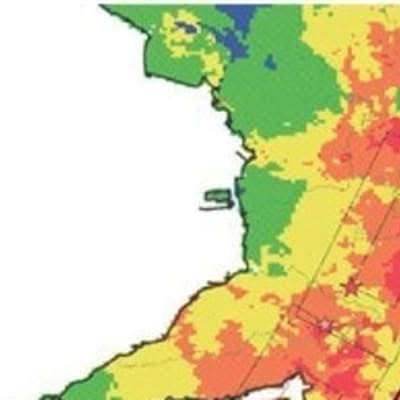
A note from the Kumamoto Intrernational Temblor Desk (we're always trembling): Today brings us to 3.5 years since the last quakes. Those occurred along the Futagawa fault. Kumanichi notes researchers have warned of a liklihood of a quake on the Hinagu fault and provided a map of possible intensities. The good news is that we'll probably be dead before it happens; the bad news is that we might not but will be when it does, as seismic activity is projected to center on central Kumamoto. Stay prepared. - William
県内広範囲で再び大地震も 日奈久断層帯ひずみ蓄積 九州大など調査で判明 | 熊本日日新聞
熊本地震の震源域とされる日奈久断層帯全体が連動した大地震が発生すると、熊本から八代にかけた平野部のほ...
Fiona here with some sports info.
Following the successful hosting of two Rugby World Cup games (except, why did the fanzone have to disappear so quickly when there are so many exciting games coming up??) Kumamoto's next big sporting event is the Handball World Championship. There are five venues, three in Kumamoto city, along with Yatsushiro and Yamaga. Tickets for all the games can be purchased here.
We will show you the Ticket for the 2019 Women's Handball World Championship.

Kumamoto's hosting the Rugby World Cup was handled admirably and was a good chance to introduce ourselves on the world stage. Seeing the large number of non-Japanese milling about downtown was startling but pleasurable: nobody knew who to stare at. (I often try to mill about by myself, but that's difficult.) Given the large number of visitors, though, a few bad apples are certain to appear.
Kumanichi reports that two inebriated Urugayan players tackled an unstated number of bar employs in Hanabata-cho following their 35-13 loss to Wales. Yes - that was the term employed: "従業員にタックルするなど暴れ". There is no word on the severity of injuries or damages caused, but I suppose a pair of inebriated, defeated rugby players are capable of quite some mayhem. - William
酔って店員にタックル、ウルグアイ2選手を聴取 ラグビーW杯後の未明 | 熊本日日新聞
熊本市で13日にあったラグビーワールドカップ(W杯)のウェールズ戦で敗れたウルグアイ代表の2選手が試...

Hello friends.
Fortunately, we were not suffered from typhoon but you might feel so sorry and worry about your friends, victims, too.
Here is important information for victims. Useful information keeps their lives, their property, their peace.
Please read this information to know in case flood, Please share it for your friends not to worry too much, not to haste, not to be late.
Good information helps their lives. ーAtsuko(*Ü*)
Original page is
https://plaza.rakuten.co.jp/yyy0801/diary/201910140000/
***********************************
For all sufferers of Typhoon,
10 Important Advice from a Lawyer
I would like to express my deep sympathy for those suffered from this typhoon.
I’m a chairperson of the committee on disaster recovery assistance in Hiroshima bar association.
I have supported the victims who suffered from large-scaled natural disasters happened here in Hiroshima. I would like to send the below 10 advice based on these previous experiences for all victims who are now in agony and sadness.
1, Don’t make too much efforts to remove dirt!
As the dirt flowed to you houses may contain something toxic for your health, you should not make too much efforts to remove it. It will make you exhausted and enhance the risk of the death related to disasters. What is most important is to keep and recover your health. You should wait for the help from the local government or volunteers.
2, Don’t worry about lost things!
The titles you have will never disappear even though you lose some kinds of certificates. Please don’t worry even though you lost precious belongings, such as bank books or a certificate of title.
3, Take photos of your houses!
I highly recommend you to take photos of your suffered houses from various angles. It will be surely useful to get an appropriate disaster damage certificate. The content of the certificate influences the content of public supports you can get. If you have some complaints about the certificate, you can request to estimate the degree of the damage again.
Please check the below website that teach you how to take photos.
https://www.buzzfeed.com/jp/kazukiwatanabe/20170707
4, Don’t haste to fix your house!
You have to wait for fixing your house until it will get dry.
You should consider the entire fixing plan and costs really necessary. If you use some kinds of public support( upper limit is only 584,000 yen,based on “temporary repairs” in the Disaster Relief Law) without deep consideration, that may prevent you from applying for public temporary houses even if your house is not fixed yet.
5, Take a consultation before you pay!
There are various kinds of public supports to aid you as for removing dirt or fixing your house. You should be careful before you decide to pay for private companies these expenses because you might not get public supports once you paid to private companies.
I highly recommend you to take free consultation in the city hall. Checking the city websites that have various information is also effective for you.
6, Confirm the content of your insurance!
Recently the most house insurances cover the flood damage. You can also use the household insurance and car insurance. Firstly, you should confirm the holder’s name of insurance. You can receive insurance payments even if you lost the certificate of insurance.
When you are not sure about the name of insurance companies or the contents of the insurance contacts, you can call the below general insurance association of Japan.
0120-501331
http://www.sonpo.or.jp/news/information/2019/1910_06.html
7, How to deal with a third party’s belongings.
When you cannot judge whether you can discard the third party’s’ belongings flowed to your properties , you should ask for the city hall or free telephone consultation provided by bar association.
Even though you know the holders’ name of something flowed to your house, to ask experts for help is safer to keep the good relationship with neighbors.
If you want to take consultation at once, please call the below number and make reservation.
0570-783-110
If you don’t have to hurry, I recommend you to wait for opening the free telephone consultation provided by each local bar association.
8, For those who lost incomes
If you find difficult to earn living because of the loss of your workplace or sudden temporary workoff, you can use various kinds of public supports such as employment insurance, business loan, group subsidies aim to encourage the area recovery.As there are systems to support employers, please confirm what information is useful for you by asking for city hall or free telephone consultation.
You can also consult lawyers how to reschedule your repayment plan.
9, Reduction and Exemption from taxes
There are really various kinds of public supports such as reductions and exemptions of some kinds of taxes, exceptional rule of utility costs, subsidies for education fee,when large-scaled disasters happen. As there might be some areas where administrations still don’t function, you should wait for setting the consultation system.
The below Cabinet Office website provide you useful information.
http://www.bousai.go.jp/kyoiku/pdf/kakusyuseido_tsuujou.pdf
10, You can surely recover your life again!
I can imagine you don’t know what to do from now on losing your house or belongings. The victims of torrential rains at Western Japan in 2018 experienced same feelings.
However it’s possible you recover your life through using various systems that can strongly support you, such as subsidies for recovery, donations, insurance, loans, the system to removal of duplicated loans. There is also a special loan for elders to fix or reconstruct the house.
I know It’s difficult for you to understand unexpected difficult things. That’s why we lawyers are here. As the most consultation fee will be free, you may use such kinds of consultations, even though you think it’s tiny things.
These are the messages from me, a lawyer who has heard from many sufferers’ voices in twice torrential rains disasters in 2014 and 2018.
I avoided to use academic legal terms in order to make my messages be easier to understand. Please share these messages with those now in agonies.
For all sufferers of Typhoon,10 important advice from a Lawyer - 弁護士YA日記:楽天ブログ
日本に巨大台風が上陸、甚大な被害が出ています。 被害の全貌はまだ明らかになっていませんが、日本全国に被災された方々がいらっしゃることは確実な状況です。 この度、日本弁護士連合会災害復興支援委員会副委員
Hi all,
I am asking on behalf of an English speaking friend (who speaks limited Japanese), who just gave birth and needed a Confinement Nanny.
Has anyone used this service before, and could recommend someone/a company they used before ?
Thank you in advance,
Olivia
An unusual aspect of Japanese is the vast number of kanji which can indicate a particular traditional cultural aspect, likely as their origins are unclear and ancient writers sought to ascribe their own interpretations, which kanji, being pictographs, allows.
This morning, it occurred to me to ask a monk about the distinctive bell-shaped windows found on many temples. She said that they are called "katou mado" but couldn't elucidate any meaning beyond that. Wikipedia is your friend, so I checked it out. These are all pronounced the same. Ready?
火灯窓 (lantern window)
花頭窓 (flower bud window)
華頭窓 (also flower bud window, but with differnt kanji for flower)
架灯窓 (architectural window)
瓦灯窓 (tile window, though they're made of wood)
Apparently, they were adopted from Chinese temples in the 15th century, and their meaning has been lost in time. Do they represent a lantern or a lotus? Memorize the kanji to impress your friends; good photo at the link. - William
https://nyanta2030.exblog.jp/iv/detail/?s=20514824&i=201305%2F29%2F09%2Fb0128609_1051940.jpgか
I posted this link yesterday without the following text. Sorry for the mistake. -- Kirk
===============
This interesting article has one mistake:
"This phase of the project is called the "Hi no Kuni Restoration Arc." ('Hi no Kuni' refers to the land of the rising sun - that is, Japan.)"
As many of you are probably aware, 火の国 (Hi no kuni; land of fire) refers to Kumamoto, not "the land of the rising sun," which would be "hi no izuru kuni" (日の出ずる国).
Actually, according to the following Japanese Wikipedia article, Hinokuni originally referred to an area that includes modern Nagasaki, Saga, and Kumamoto. The Wikipedia article is very brief but, it seems to indicate that the "hi" (火 -- fire) morphed into "hi" (肥 -- fertility) and then the whole area was divided into front (前; zen) and back (後; go) to become 肥前 (Hizen -- Nagasaki and Saga) and 肥後 (Higo -- Kumamoto):
https://ja.wikipedia.org/wiki/火国
Since the Wikipedia article is very brief, I looked for another Japanese article to get some confirmation and found this:
https://jpnculture.net/hinokuni/
This fits with my summary but it also discusses other theories about the origin on "Hinokuni." If I have time, I may come back to this later but for now, I think it's safe to say that "Hinokuni" (火の国) and "Higo" (肥後), both of which refer to what we now know as Kumamoto, seem to have a historical connection.
-- Kirk
https://www.animenewsnetwork.com/interest/2019-10-12/4th-one-piece-campaign-to-revitalize-kumamoto-prefecture-distributes-hi-no-kuni-leaflets/.151791
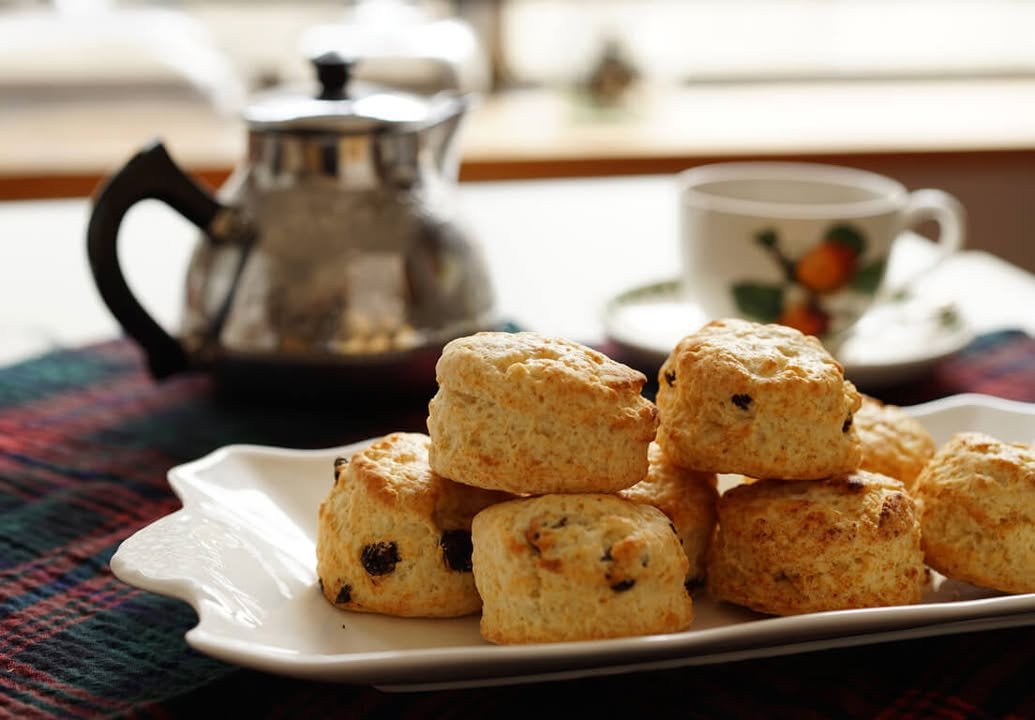
I received an inquiry about toll roads (kosoku doro -- expressways or highways) and my interlocutor mentioned that a friend of his runs a British pastry shop called "Tomi's Shortbread House." I wasn't asked to promote the shop but the web page (in English, of course) looks too good to ignore.
https://www.tomis-shortbread.com/en/aboutus.html
You can find a Google map on this page.
I haven't been there yet but if any of you are familiar with the establishment, please post a little review as a comment to this message. Thanks!
-- Kirk
P.S. My only complaint about the website is that, while the Japanese has a link to the English, the English doesn't link to the Japanese. Here's the Japanese address:
https://www.tomis-shortbread.com
https://www.animenewsnetwork.com/interest/2019-10-12/4th-one-piece-campaign-to-revitalize-kumamoto-prefecture-distributes-hi-no-kuni-leaflets/.151791
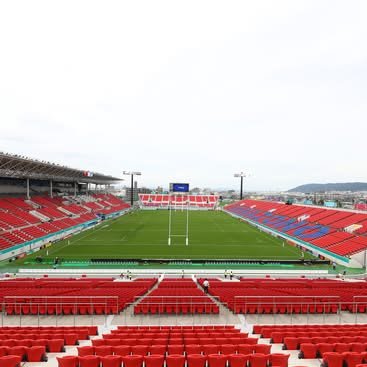
Today, the match between Wales and Uruguay will be played in Kumamoto as scheduled. Shortly after the match starts here (at about 5:15) the match between Japan and Scotland will begin in Yokohama, despite the heavy rain they experienced there.
https://www3.nhk.or.jp/nhkworld/en/news/20191013_49/
-- Kirk
https://www.rugbyworldcup.com/update/510965
Hanazono and Kumamoto matches to go ahead, Kamaishi match cancelled - Rugby World Cup 2019 | rugbyworldcup.com
USA v Tonga and Wales v Uruguay go ahead as scheduled, Namibia v Canada is cancelled.
Hello friends.
Fortunately, I enjoyed Mizuakari tonight. Now, it finished to tidy up😊
But around KANTO it seems to be suffered from typhoon. It's the news for your friends in KANTO.
https://m.facebook.com/nhkworld/videos/495381951046217/
Be safe, be careful, help yourself and help each other.ーAtsuko(*Ü*)
Fiona here, with a plug for my one-woman pop-up escape room venture:
International School of Spies will be returning for a short run between Halloween and Christmas. If you were too busy or didn't manage to pull a team together before the summer, you get a second chance! If you're already a fan of escape rooms, or even just curious, this is the only one of its kind in Kumamoto, and probably the only one anywhere that's built into a working classroom. I designed and built the game from scratch and want to share my crazy project with as many people as possible.
As before, it's best played by a team of 2-6 people and you'll need around 90 minutes. There is no lock-in element to this game, nothing scary, and you're not actually escaping from Britz. Instead it's a mystery that you and your team have to solve, with clues hidden around the room, puzzles and codes, and an intriguing story of espionage and secret missions. Play with your family, friends or students - you don't need prior escape room experience, hints are available if you're stuck and you might be surprised to discover skills you never knew you had!
International School of Spies takes place at Britz in Onoue, close to the prefectural office, Higashi Bypass and the streetcar line. It costs 1000 yen to play (500 yen for children and students). To book your game, get directions, find out more... please visit the Escape from Britz Facebook page.
Already played this game? Stay tuned for my next book coming out in 2020, and possibly a new game to mark its launch. And please tell your friends, share posts, write reviews and spread the word to help School of Spies reach a few new people. Your support is greatly appreciated!

Hi! Kirk here. Sorry for neglecting the page recently. Thanks to everyone who has attended to the care and feeding of the page in my absence.
A while ago I complained about the lack of an official English translation of the new 5-level warning system:
https://www.facebook.com/Kumamotoi/posts/2657253907681358
Well, it seems that a translation is now available, though it is from NHK, not the JMA. I called the JMA (Japan Meteorological Agency) to say that I really thought they should publish official foreign-language versions of the warning system and received an pleasant, positive response on the phone but they still don't seem to have published such translations.
I'm writing about this today because level 5 warnings have been issued in the Tokyo area today. A key point about level five is that it's probably too late to evacuate. In other words, at level five, the risk of attempting to travel to an evacuation center may be too great. So, at level 5 you should probably do what ever you can to be safe without leaving your immediate area: going to a higher level in your building, going to a room away from glass windows that might break easily, building a raft (just kidding ;) ), etc. This NHK article doesn't make the meaning of level five clear.
There are always lots of foreigners in the Tokyo area and there are even more there now because of the Rugby World Cup. I'm concerned that, as a country, Japan has not done a very good job of getting the word out about this potentially life-saving warning system. If people are familiar with the meaning of the levels (particularly levels 4 and 5), they can understand the basic idea when they see the warning on a TV screen, even if the program is in Japanese.
It might be too late at this point, but if you have a friend who is currently in an affected area and may not know about the warning levels, please share this post with her or him. Even if it is too late for this disaster, getting the word out about this warning system may help people when the next disaster happens.
Saving lives with better disaster warnings | NHK WORLD-JAPAN News
The Japan Meteorological Agency earlier this year rolled out a new five-level disaster warning scale to be used for floods and landslides. It is designed both to simplify the existing system and to reduce casualties by speeding up evacuations. For the first time, the warning system includes clear in...

A note from the Kumamoto International Desk of Pointless Arguments (we argue a lot just for the heck of it): Charter flights from Korea to Kumamoto Airport have plunged by 34% since commencement of Pointless Arguments, while ferry visits to Tsushima are down 41% and visits to Hakata are down 23%. Looks like we're doing our job well. - William
韓国定期便、7月から36%減 関係悪化でキャンセル相次ぐ | 熊本日日新聞
九州運輸局は10日、このところの日韓関係の悪化に伴い、熊本空港を含む九州と韓国を結ぶ定期便が運休と減...