Posts
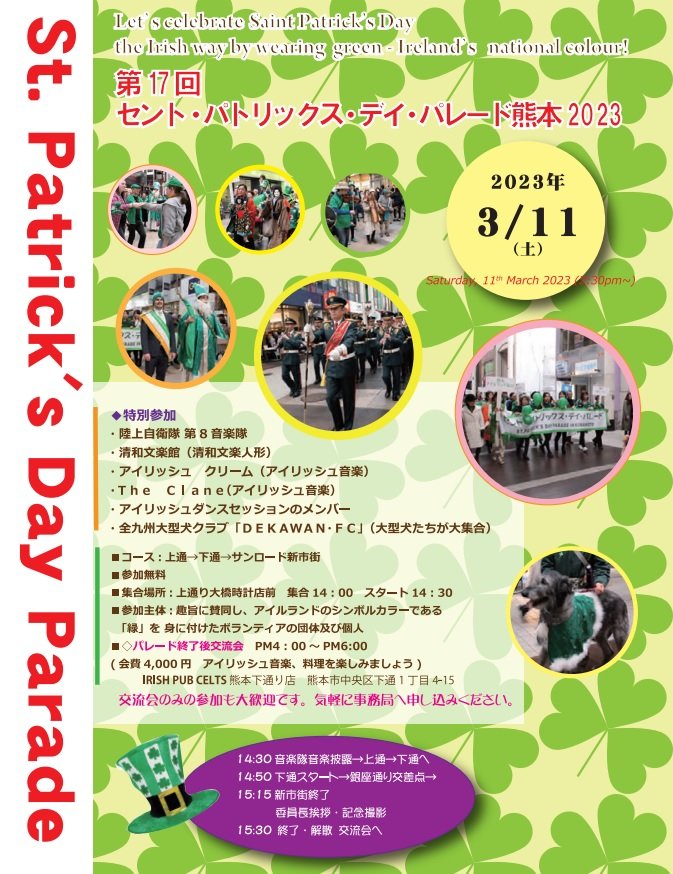
Ruth here with a reminder to wear something green if you're downtown on Saturday, 11th March, from 2-4pm, as that's when the Kumamoto St.Patrick's Day Parade will be held ☘️ There's also an afterparty at Celts on Shimotori from 4-6pm for those who are interested!! 🍻 More details on the parade and proceedings here: https://www.kumamoto-ireland.org/
Thank you to everyone who came out these three Sundays to practice some Irish dances! 🎶 Your participation was greatly appreciated! If anyone is interested in joining future Irish Dance Circle events certainly let me know 👍
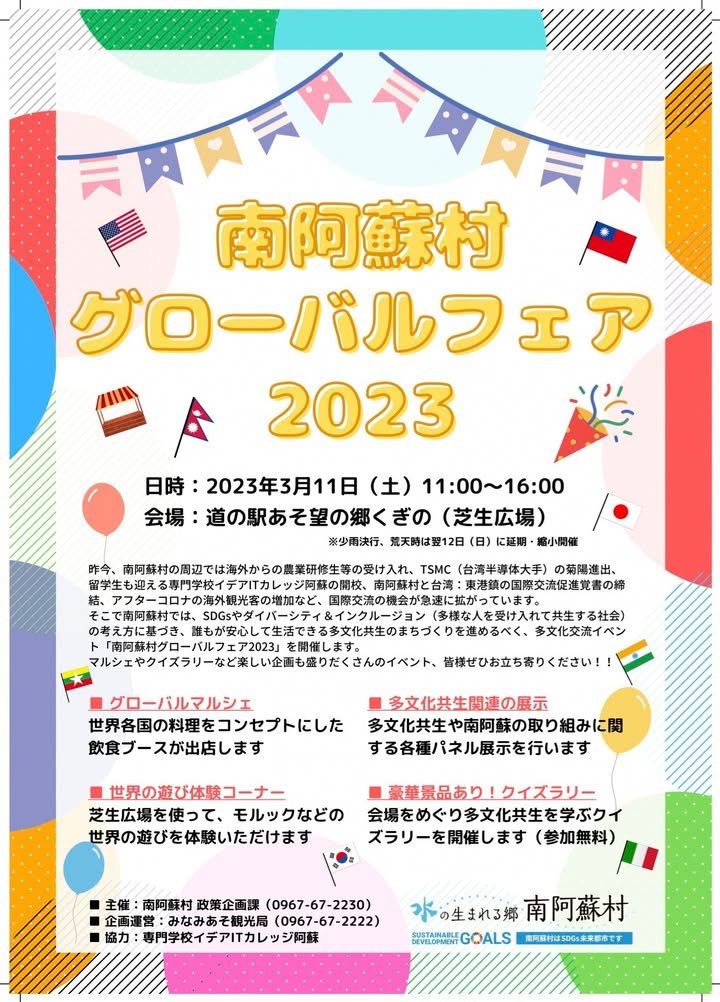
Joha(nnes) here from Minamiaso Village.
There is an upcoming multicultural event here in Minamiaso Village (Michi-no-eki "Aso-bō no sato", Kugino) on March 11, 2023. The event aims to promote a better understanding of multicultural residents in general and of course provide an opportunity to catch up with other residents from abroad in the rural areas of Aso. Details can be found at the link below.
https://www.vill.minamiaso.lg.jp/kiji0032350/index.html
Kirk here. Though it may be too late (I'm not sure) I'd like to go ahead and share this post from Mr. Yagi:
https://www.facebook.com/hiromitsu.yagi/posts/pfbid0VHEBLcsjEVJFShsV6oHacKVnTj9pCqvAsjbVF86pP3X7wfGZT3PEM3qPwD2c9692l?notif_id=1677825753024087¬if_t=close_friend_activity&ref=notif
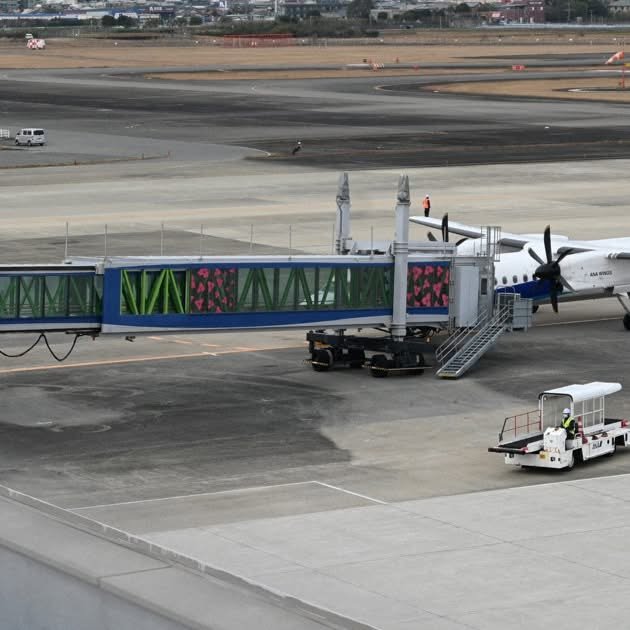
Kirk here with another report on how punctual Kumamoto Airport is:
"Third place went to Aso Kumamoto Airport in the city of Kumamoto with a 92.3% on-time departure rate."
Miyazaki has world's best on-time departure rate in 'small airports' category - The Mainichi
MIYAZAKI -- Miyazaki Bougainvillea Airport in this southwestern Japan city had the world's highest on-time departure rate in the
Kirk here with a second post about how Kumamoto University will "'hire' graduate students studying semiconductors to supply top-quality workers to the growing local chip industry."
https://www.studyinternational.com/news/kumamoto-university/
The URL of the first post is here:
https://www.facebook.com/Kumamotoi/posts/pfbid034Np1gRY2CCAvQpuDSaXJdVYoS33TacC7hHicR72LaDaiKJqtKhuAvrxA7S85gYxpl
Kumamoto University graduate students can soon work in Japan
Kumamoto University announced that it will hire graduate students studying semiconductors, in hopes of supplying top-quality workers to the local chip industry.

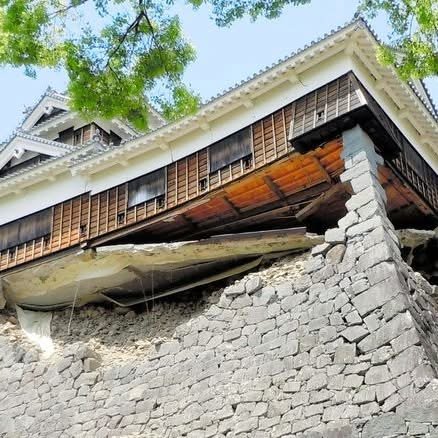
Kirk here. I found this rather extensive article worth the time it took to read it. In a nutshell, the technology referred to in the title involves (1) identifying the rocks that need to be returned to specific locations and (2) enhancing the strength of the reconstructed walls while remaining largely faithful to the original construction methods.
Technology helping rebuild fallen Kumamoto Castle walls | The Asahi Shimbun: Breaking News, Japan News and Analysis
KUMAMOTO--Left devastated and in ruins by a spate of strong earthquakes seven years ago, iconic Kumamoto Castle is rising from the ashes.
Atsuko with Shochu tour information.
Only 6 seats left!! (๑•̀ㅂ•́)و✧
The registration deadline is March 2, Thur.
(Fiona) Kumamoto is hosting a big conference for language teachers in June. It will be of particular interest to those with an interest in Computer Assisted Language Learning as well as a great opportunity to meet English teachers from all over Japan.
Kirk here sharing something that was posted to the Kumamoto International Discord server:
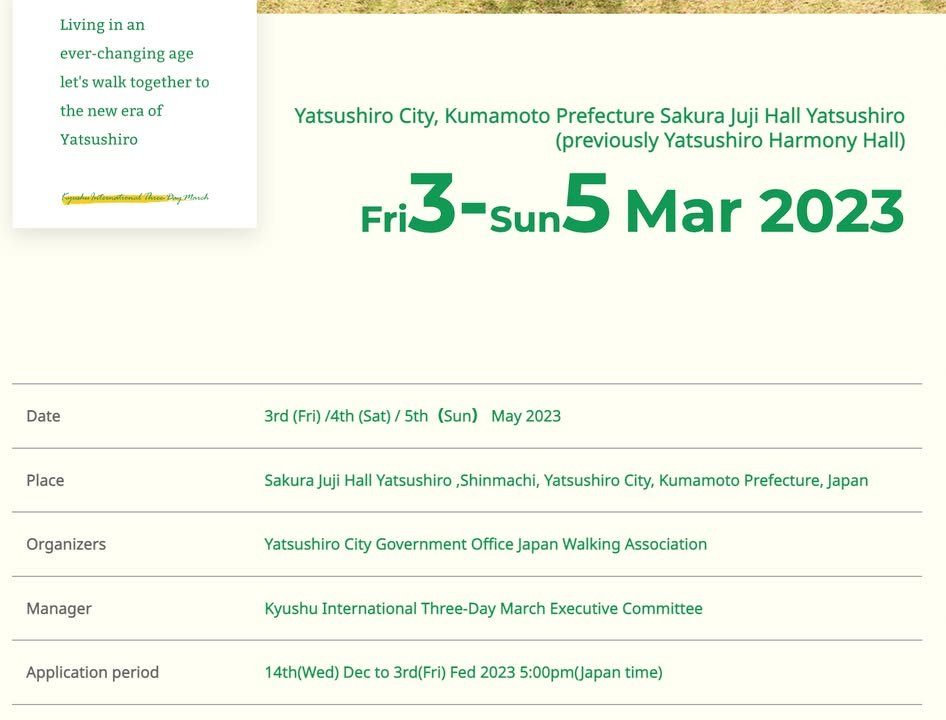
This weekend is the Kyushu International 3 Day March! It starts this Friday and goes until Sunday. If you're available those mornings for a brisk walk around Yatsushiro, starting at Sakurajuji Hall (https://goo.gl/maps/fdxcLVnmUUQGK6ZJ6), please come on by! Registration is ongoing from 6:30 am, the 40 km long courses depart between 7:15-8am, the 30 km courses depart between 8:15-9am, the 10 km courses depart between 9:15-10am, and the 5 km course departs between 10:15-11am. More details are available at Access Yatsushiro, and the 3 Day website: https://www.facebook.com/accessyatsushiro https://www.kinasse-yatsushiro.jp/3day-march_e/
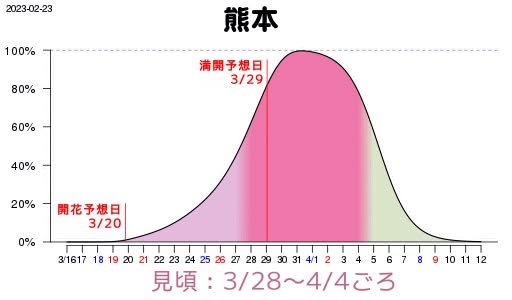
William We're about a month from the cherry blossom front (or "sakura zensen, 桜前線," as it's known), so preparing strategy now would be timely.
One could kill a few birds with one stone - well, a whole lotta stones, as that is what the stairs are made of - by climbing the temple route (参道, sandou) to visit Honmyouji (本妙寺), a temple of the Nichiren sect. As Wikipedia has it, "In 1585 (Tensho 13), it was founded in Osaka by the founder of Nisshin to pray for the repose of the soul of Kiyomasa Kato's father, Kiyotada. In 1600 (Keicho 5), after Kiyomasa became the lord of Kumamoto Castle, it was moved to Zuiryu-in, which had been built near Kumamoto Castle. Kiyomasa died in 1611, and in accordance with his will, the statue of Kiyomasa was enshrined in Jochi Mausoleum on Mt. Nakao. In 1614 (Keicho 19), Honmyo-ji Temple, which was destroyed in a fire, was moved to its current location under Jochi Mausoleum."
Apparently, its popularity among worshippers drew those suffering from leprosy (or "hansenbyo", as it's known in Japanese) to its steps to beg for alms. Temples were established along the route to care for the lepers (and also to take advantage of alms-givers), many of which remain to this day.
A visit should be a full-day trip if one plans to visit temples along the way as well as walk the steps behind the temple to the mount peak, on which stands a large statue of Kato Kiyomasa.
A chart of expected cherry blossom development in Kumamoto is below, as well as a photo of the Honmyouji sandou. One could do it three times: while the cherries are in bud, during full bloom, and a few days later, when the petals are swept by the breeze through the air and along the ground, known as "sakura fubuki" (桜吹雪).
Kirk here with news that's old but should still be of interest if, like me, you missed it when it first came out:
--- start quote ---
Osaka-based Kansai Electric Power Co. is at the heart of the anti-competitive behavior. It had formed one-on-one cartels with Chugoku Electric, Chubu Electric and Kyushu Electric, according to the sources.
--- end quote ---
Our electric bills here in Kumamoto (where we rely on Kyushu Electric) have probably been excessively high because of the collusion.
Trade watchdog to fine 3 electric utilities over cartel behavior | The Asahi Shimbun: Breaking News, Japan News and Analysis
The Fair Trade Commission notified three regional utilities that it plans to slap them with a surcharge of about 100 billion yen ($737 million) over suspicions they formed cartels that ended competition for lucrative corporate customers.
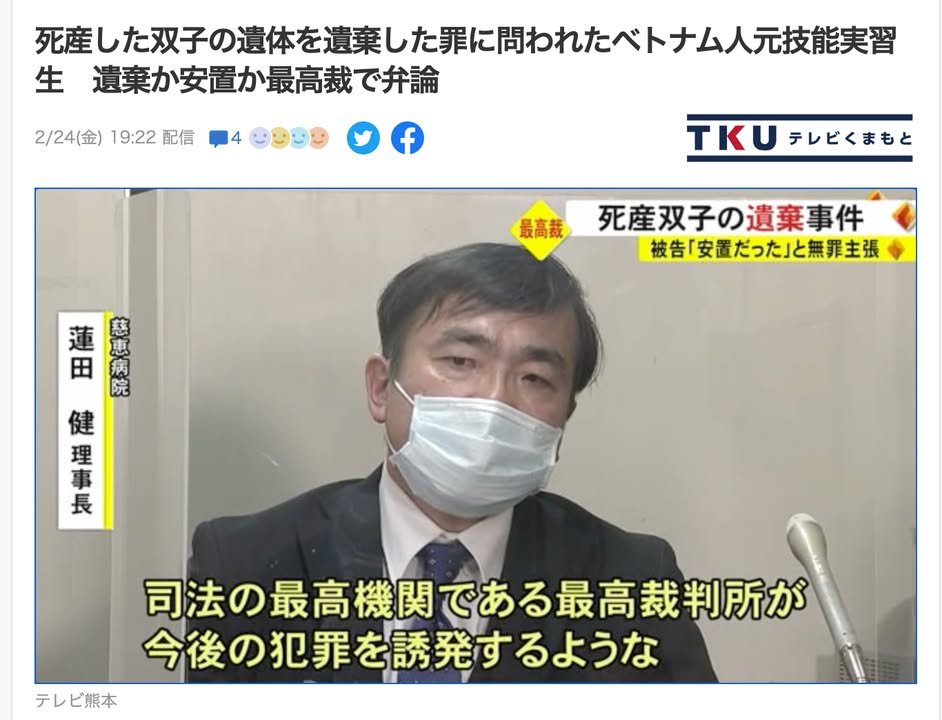
Kirk here with an update on the case of Le Thi Thuy Linh, who is appealing her conviction for abandonment of corpses (she did not report the stillbirths of her twins immediately).
The Supreme Court heard the case recently, but I'm not aware at this writing of when the verdict will be issued.
I was interested in the support that Dr. Takeshi Hasuda of Jikei Hospital demonstrated for Ms. Linh by traveling to Tokyo and appearing at a press conference to call for the overturning of her conviction. Dr. Hasuda said that "if Ms. Linh is guilty, then almost all women who feel compelled to give birth in isolation may be found guilty of a crime" (今回の行為が罪に当たるなら、孤立出産の死産はほとんど犯罪とみなされてしまう):
https://news.yahoo.co.jp/articles/0607c575943b43378599387950f27b01e58ceeae
This position makes perfect sense to me. In my view, failing to take the factors that led to Ms. Linh's isolation into account and saying "she should have asked for help" would be a tremendous miscarriage of justice. And, it seems that I am just one of many -- the following article (with extended video) reports that Ms. Linh's case has received over 90,000 signatures calling for her aquital:
https://www3.nhk.or.jp/lnews/kumamoto/20230224/5000018365.html
Previous posts on this page about Ms. Linh's case can be found here:
https://www.facebook.com/page/123734781033296/search?q=linh&filters=eyJycF9jaHJvbm9fc29ydDowIjoie1wibmFtZVwiOlwiY2hyb25vc29ydFwiLFwiYXJnc1wiOlwiXCJ9In0%3D
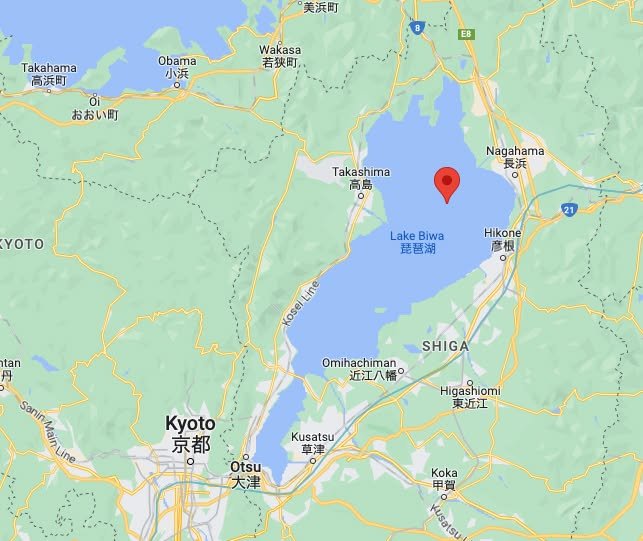
Kirk here with some amazing news I came across today: The volume of groundwater in Kumamoto is 1.6 that of Lake Biwa. For reference, I'm sharing screenshots of Lake Biwa and Kumamoto Google maps. I think you can get a pretty good idea of just how huge Lake Biwa is -- and the volume of water in Kumamoto considerable greater than that! It's hard to believe but that's what researchers at Kumamoto University say, according to the following Japanese news report (with video):
https://www3.nhk.or.jp/lnews/kumamoto/20230210/5000018246.html
Access to groundwater is an important reason for TSMC coming here (the chip manufacturing process requires lots of water). Recently there's been talk about a second plant being built:
TSMC’s Second Japan Plant to Reportedly Cost Over $7.4 Billion
https://www.bloomberg.com/news/articles/2023-02-23/tsmc-s-second-japan-plant-to-cost-over-7-4b-nikkan-kogyo
There's concern, though, that two huge plants could eventually disturb the natural balance in the water table. Too much paving over of natural areas is another problem for Kumamoto's groundwater (pavement prevents the necessary seeping in process). So, even though 1.6 the volume of Biwa Lake sounds infinite, it's not. I hope due attention will be paid to conservation as Kumamoto develops.
P.S. The NHK report about groundwater in Kumamoto says that the Prefecture has budgeted about 2 million US dollars for groundwater preservation.
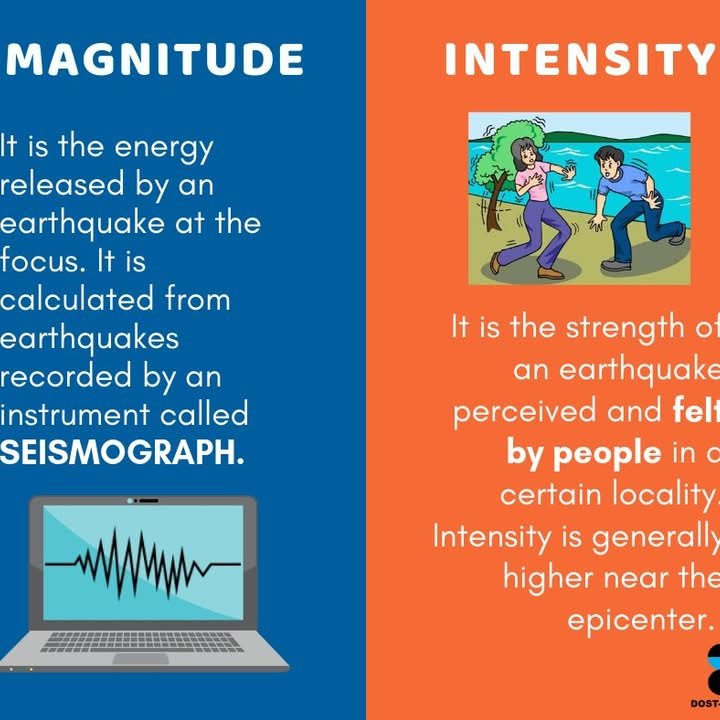
Kirk here with some thoughts about how big the 2016 Kumamoto earthquake was and how it compares to the disaster in Turkey and Syria. The first thing to know is that magnitude is how scientists compare the size (energy release) of an event but that even with the same magnitude a number of factors can affect the intensity of the shaking that hits you in your particular location. Here's a nice succinct explanation I found on the web:
--- start quote ---
Magnitude is the most common measure of an earthquake's size. It is a measure of the size of the earthquake source and is the same number no matter where you are or what the shaking feels like. < some text omitted > Intensity is a measure of the shaking and damage caused by the earthquake; this value changes from location to location.
--- end quote ----
https://www.usgs.gov/faqs/how-are-earthquakes-recorded-how-are-earthquakes-measured-how-magnitude-earthquake-determined#:~:text=The%20Richter%20scale%20measures%20the,for%20research%20and%20comparison%20purposes.
OK, so how does the 2016 Kumamoto earthquake compare with what happened in Turkey/Syria? First let's look at magnitude:
Kumamoto: 7.0
Turkey/Syria: 7.8
0.8 may not seem like that much of a different but magnitude is a logarithmic scale where one point on the scale is 10 times greater that the point below it. That means that the size of the quake in Turkey/Syria was eight times (!) what occurred here.
Now, for intensity. Japan has "shindo," it's own intensity scale, but that's not used outside of Japan so it's not very helpful for comparison. There is another intensity scale that we can look at: the modified Mercalli intensity scale.
Kumamoto: 8.8 (maximum)
Turkey/Syria: 11 (maximum)
Sources:
https://en.wikipedia.org/wiki/2016_Kumamoto_earthquakes
https://en.wikipedia.org/wiki/2023_Turkey%E2%80%93Syria_earthquake
https://en.wikipedia.org/wiki/Modified_Mercalli_intensity_scale
(Note: I have my doubts about the 8.8 assessment for Kumamoto. Based on what I know about what happened and the description of the levels in the Mercalli scale I would say that maximum in Kumamoto (in Mashiki) was closer to 10 than to 8.8 on that scale.)
At any rate, no matter how you slice it, we can see that the people of Turkey and Syria got hit very, very hard indeed. This not, of course, to minimize the very significant damage that occurred here -- just to provide a comparative perspective.
By the way, if you are interested in donating money to help the people of Turkey and Syria, there's some information here:
https://www.facebook.com/Kumamotoi/posts/pfbid02E7Y2TTyH2YJat8UqtbZVWeSsRP7DWxRQmdenPQrgPD9xjYpodPUZFMaBwCY9KXRTl
https://twitter.com/phivolcs_dost/status/1392324619453964296
PHIVOLCS-DOST on Twitter
“MAGNITUDE VS INTENSITY: Magnitude refers to the energy released by an earthquake at the focus. It is calculated from earthquakes recorded by an instrument called seismograph. Intensity is the strength of an earthquake as perceived and felt by people in a certain locality.”
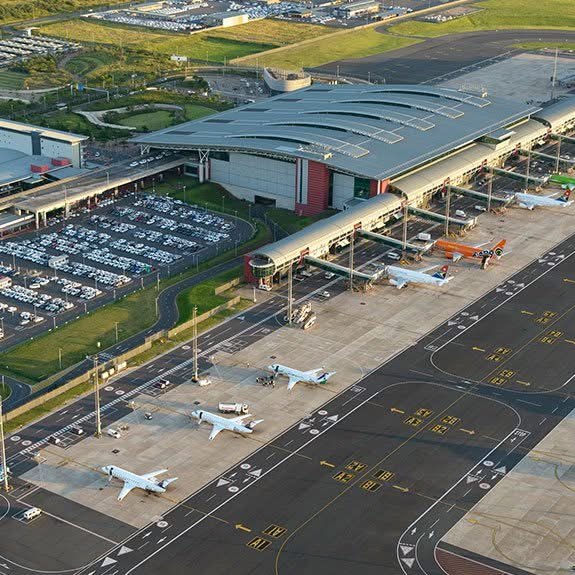
Kirk here reporting that Kumamoto Airport is the 7th most punctual airport in the world! Here's the list:
1. Osaka International
2. Matsuyama
3. Miyazaki
4. Nagoya Chubu Centrair International
5. Alejandro Velasco Astete International Airport (Peru)
6. Kagoshima
7. Kumamoto
8. Pinto Martins/Fortaleza International (Brazil)
9. Panama City Tocumen International (Panama)
10. Fukuoka
Report ranks two South African airports in global top 20 regarding punctuality
Two South African airports have scored highly in the 'Punctuality League 2023' report. This report was compiled by global aviation database and analytics company OAG, using 2022 data, and released on Tuesday. It listed, in the order of their On-Time Performance (OTP), the top 20 airports in the wor...
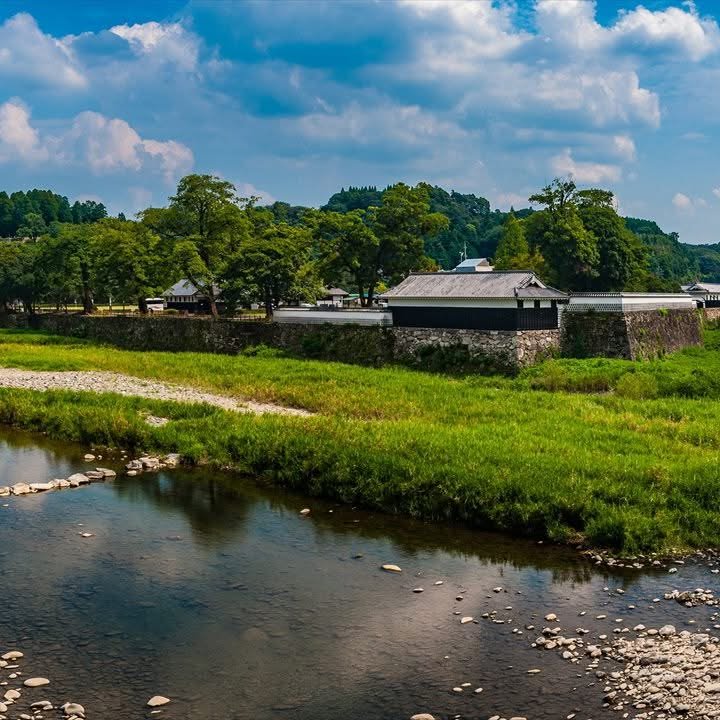
Kirk here with something for those of you who read Spanish. I searched but couldn't find an equivalent article onf the Nippon.com site in English. Here's a DeepL translation of part of the article:
"Hitoyoshi Castle was the residence of the Sagara clan, which ruled the area for about 700 years, from the late 12th century, when the Kamakura shogunate appointed Sagara Nagayori as lord of the land, until the Meiji Restoration (19th century). In the ruins of the residence of the Sagara's main vassal, located in the fortress, a underground room containing a well was discovered, something unusual in Japan."
https://www.nippon.com/es/guide-to-japan/castle00143093/
Cien castillos de Japón®: el castillo de Hitoyoshi (Kumamoto)
El castillo de Hitoyoshi era la residencia del clan Sagara, que gobernó la zona durante unos 700 años, desde finales del siglo XII, cuando el shogunato de Kamakura nombró señor de esas tierras a Sagara Nagayori, hasta la Restauración Meiji (siglo XIX). En las ruinas de la residencia del princip...
Kirk here with an English report on a "hugging and kissing" incident. Actually, I learned about this yesterday and considered posting about it then tbut decided against it because I didn't feel I could be sure about what the fuss was about. The RKK report I saw on TV made me wonder if the young couple got in trouble for mild expressions of affection. But, when I looked at other reports on the web, I got the impression that the behavior was considerable more "over the top" than that. The "multiple tips from outside sources" mentioned in the article may be related to a video that was recorded from outside of the building (though a window) mentioned in this Japanese-language report:
https://www.fnn.jp/articles/-/490041
Moral of the story: If you want to display affection at work, make sure you are not being observed (or video tapped).
https://japannews.yomiuri.co.jp/society/general-news/20230223-92993/
City Govt Reprimands Couple for Hugging, Kissing at Meeting Room in Kumamoto Pref.
KUMAMOTO — The Yatsushiro city government in Kumamoto Prefecture reprimanded Wednesday two employees, a male and female, for repeatedly hugging and kissing inside the government building.
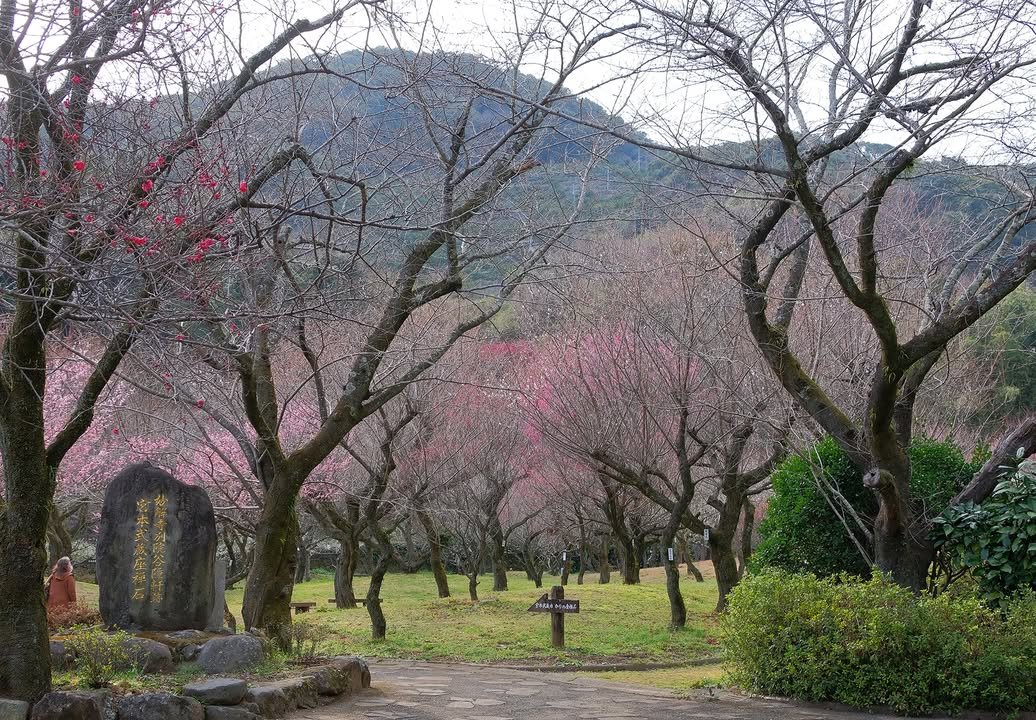
Spring is on the way, time to enjoy the plum blossoms that suddenly seem to be blooming everywhere. Two excellent spots to stroll and view are in Nishi-ku: Taniozaki Bairin Kouen (谷尾崎梅林公園)、and in Shimasaki 百梅園 (島崎4丁目10-6). They both have parking areas , but the one in Taniozaki also has an "Umegaya Mochi "stand (heated up on the grill while you wait , a kind of thin manju filled with ....of course....sweet bean paste). It also features the famous武蔵ゆかりの座禅石 (Musashi Yukari no Zazen Ishi - the rock on which Masashi sat in Zen seiza and meditated) . The parking lot fills up quickly . Hyakubaien 's parking lot is up a narrow steep curved entrance and has space for about 5 cars. The blossoms should be great this weekend, and if you like mejiro (the tiny greenish birds with the distinctive white ring around each eye. Both can be reached by bus, with a bit of a walk from the bus stop to Hyakubaien .
Kirk here reminding you that today is cat day:
--- start quote ---
More than 30 years ago, in 1987, the Executive Cat Day Committee in Japan chose February 22 after a poll of over 9,000 cat lovers. The date 2-22 can be pronounced ni-ni-ni, which sounds close the Japanese equivalent of a cat's meow, nyan-nyan-nyan. Hundreds of cat lovers gathered to reflect on the extraordinary virtues of cats and offer prayers for their pets' longevity.
--- end quote ---
https://en.japantravel.com/news/national-cat-day/68647
If you didn't have an opportunity to be nice to a cat today, there's always tomorrow (cats don't pay much attention to calendars anyway 😉 )!
https://dot.asahi.com/aera/2023022100052.html?page=1
旅猫ニャン吉、熊本城へ行く 復旧中の“最強の城”と交わしたテレパシーとは〈AERA〉
2月22日は猫の日。発売中の「NyAERA(ニャエラ)2023」から、旅猫ニャン吉の視察レポートをお届けします。「最強の旅猫さん、最強の城はいかがでしたか?」...
