Archive of the Kumamoto International Facebook group, 2011–present.
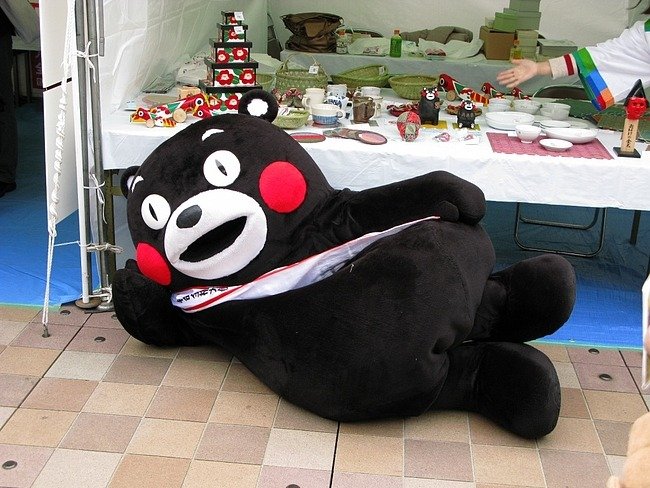
Weather-wise, it's kind of a depressing day today, so here is a sexy photo of Kumamon to cheer you up. - William
Here's a lengthy article on Kumamoto Castle. I think the target audience is prospective tourists. --Kirk https://www.ad-hoc-news.de/boerse/news/ueberblick/kumamoto-jo-japan-s-majestic-black-castle-in-kumamoto/69186714
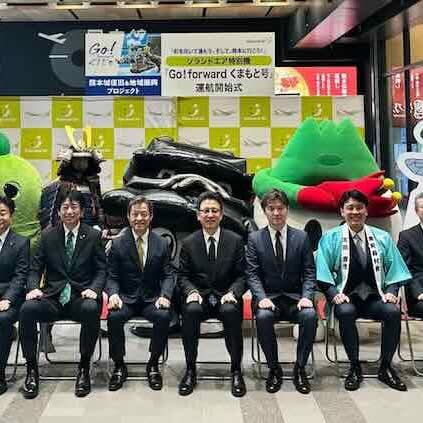
Kirk here with news about how Solaseed Air is planning to help promote the cities of Kumamoto, Kikuchi, and Yamaga, the towns of Takamori and Mifune, and the village of Minamiaso via in-flight announcements and articles in their in-flight magazine. Sounds good. One thing I noticed, though, is the odd punctuation that has become pretty common in Japan, "Go! forward Kumamoto." I once wrote a letter to the editor of the Asahi Shimbun (published nationally; Japanese edition) that NHK's "Go for! Tokyo 2020" (Olympic slogan) was very odd as English because an exclamation mark functions as the end of a sentence and "Go for!" doesn't stand alone as an utterance. Before that, my university wanted to create a poster or something that said "We are! Kumagaku" — all in English (but, of course, for a Japanese audience). Fortunately, the higher ups listened to reason and came up with a better slogan. In Japanese, I have no complaints about this relatively common pattern: トビタテ!日本 がまだせ!熊本 目指せ!甲子園 がんばれ!阪神タイガース 頑張ろう!熊本 行こう!東北 The problem occurs when this Japanese sensibility regarding what an exclamation mark is and how it can be used is applied to English as NHK did with "Go for! Tokyo 2020." The more basic issue is whether punctuation is considered to be part of a language or separate from it. Of course, my view is that punctuation is part of English, so the application of this usage to English bothers me, in part because I suspect it compounds the confusion of young Japanese people who are studying English. Solaseed Air Launches Special “Go! forward Kumamoto” Jet to Support Kumamoto Castle Restoration - TRAICY Global Japan’s Solaseed Air launched its special aircraft “Go! forward Kumamoto” (Boeing 737-800, registration: JA807X) on April 14. Marking ten years since the 2016 Kumamoto Earthquakes, the project aims to support the restoration of Kumamoto Castle and promote regional revitalization, under the the...
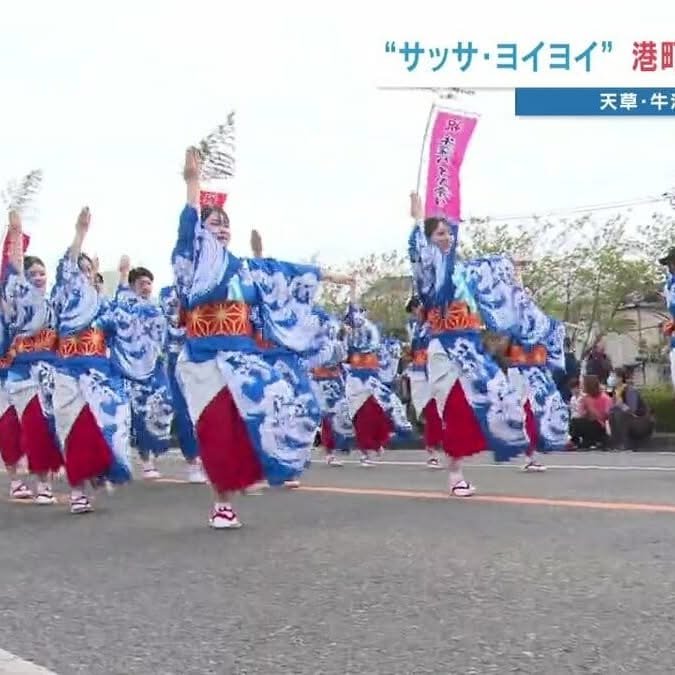
A festival is in progress in Ushibuka. Check out the video if you're interested. -- Kirk --- start AI translation --- The “Ushibuka Haiya Festival” opened on April 17 in the port town of Ushibuka in Amakusa City, Kumamoto Prefecture, drawing large crowds of spectators. This year marks the 54th time the Ushibuka Haiya Festival has been held. The first event is a mass dance held on the Ushibuka Haiya Bridge. At 3:00 p.m., following a parade by kindergarten children, local junior high school students led the way. To the lively rhythm of the Ushibuka Haiya song, 260 dancers dressed in kimono and matching happi coats paraded across the bridge, chanting “Sassa, yoiyoi.” On April 18 and April 19, a “Haiya Grand Dance” will take place, with a total of 41 groups and about 2,000 dancers parading through the shopping district. Other events include a maritime parade of fishing boats, and the port town of Ushibuka will be filled with festival excitement through April 19. Participants are also welcome to join the grand dance on April 18 and 19 on the day of the event. --- end AI translation --- 踊らにゃ損ソン!〝サッサ・ヨイヨイ〟熊本・牛深ハイヤ 4月18日、19日は飛び入りOK | 熊本のニュース|RKK NEWS|RKK熊本放送 熊本県天草市の港町では「牛深ハイヤ祭り」が4月17日開幕し、大勢の見物人で賑わっています。牛深ハイヤ祭りは、今年で54回目を迎えました。最初のイベントは、牛深ハイヤ大橋での総踊りです。午後3時、園児たちの…
Kirk here with some tech/business news. Even with the recently weakened yen 60 billion yen is a chunk of change by any measure. In US dollars it is now about $375–$380 million. ---start quote --- The plant in the city of Koshi, Kumamoto Prefecture, is being constructed by Sony Semiconductor Manufacturing Corp., a subsidiary based in the Kumamoto town of Kikuyo, at a total cost of 180 billion yen. The factory is expected to have a monthly production capacity of 10,000 300-millimetre wafers, with supplies seen starting in May 2029. --- end quote --- Japan approves 60bn yen for Sony image sensor plant in Kumamoto The subsidy will support Sony expansion plans in Kumamoto as Tokyo moves to secure strategic semiconductor supplies under economic security rules.
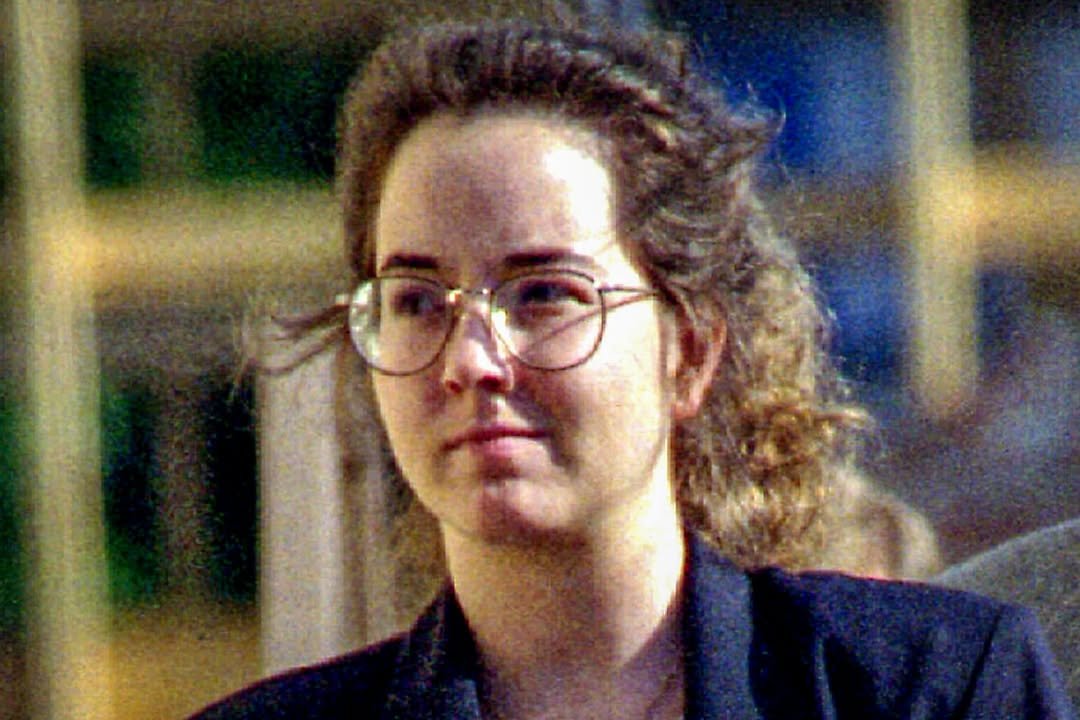
Kirk here with sad news. In 1994, in South Carolina, Susan Smith said that a Black guy had carjacked her vehicle with her two young sons inside. It was a lie. Well, today in Kumamoto another group of people was similarly scapegoated: not Black guys but those nasty foreigners. Early this morning when I was checking news to feed to this page I found several articles about a Japanese person who had been attacked by two people who "appeared to be foreigners and spoke broken Japanese." I doubted the story from the beginning but my suspicion was that the criminals may have been feigning foreignness to throw the police off. In fact, a Japanese rapist recently used that technique to avoid apprehension but to no avail: https://newspicks.com/news/16320651/ Folks in Kumamoto heard on the evening news today (and will probably read in the local paper tomorrow morning) that the "victim" had just made the whole thing up. Of course, he's going to get prosecuted because falsely reporting a crime is itself a crime. But, unfortunately, "slander against foreigners" will probably not be one of the charges. The news that two nasty foreigners had attacked an innocent Japanese guy spread like wildfire in Japan. Even now, if you search with key words like 熊本外国人 強盗 you get lots of articles about the "crime" as reported by the liar, not the fact that it was a lie. This is a common problem in journalism. A big fat headline on the front page with a falsehood and a little blurb with a correction buried on page 7 a day or two later just don't balance out. For most of Japan, this bit of news will stay in memory (for those who remember it) as confirmation of why Japan should not allow foreigners to run rampant. Ah . . . :( P.S. In rereading the translation of the Japanese article from RKK that explains that the guy was lying after all, I'm struck by the lack of any mention of the scapegoating of foreigners. Though it will make this post quite long, I'll post a translation of RKK's original article, published before the deception was discovered so you can see the difference. I suppose an argument can be made for not repeating the slander against innocent foreigners. Still, pointing out that discourse about the criminal nature of foreigners is often baseless, as was this report, would have been welcome. --- end ChatGPT translation --- Robbery in the city was “a lie” — elementary schools conducted group dismissals — police unable to confirm any robbery — man in his 50s April 17, 2026 (Fri) 18:48 Domestic It has been revealed that a man who called 110 in the early hours of April 17 in Kumamoto City, reporting that “I was attacked by two men and had money stolen,” later told police that he had “lied.” Police have also announced that “no facts confirming a robbery could be established.” On the morning of the 17th, a street in Kumamoto City was cordoned off, creating a tense atmosphere. At a spot concealed with cloth, many police officers could be seen. At around 4:40 a.m. on April 17, a man in his 50s in Keitokubori-machi, Chuo Ward, Kumamoto City, made a 110 call saying, “I was attacked by two men and had money stolen.” The man told police that two men approached his car; one pointed a knife through an open window, while the other took 20,000 yen in cash from a bag on the passenger seat and fled. Police, treating the case as a robbery, began an investigation. As a result, nearby elementary schools carried out group dismissals. Parent picking up a child: “I came to pick up my second-grade child. We were informed that a robbery had occurred in our neighborhood, so I was a bit worried.” However, just before 4:00 p.m., police announced, “As a result of the investigation, we were unable to confirm that any robbery occurred.” According to police, no suspects were captured on security cameras near the scene, and the reporting man also told investigators, “I lied.” Police will now investigate the man’s motive for making the false report. According to police, if a false report causes a large deployment of officers and patrol cars and significantly disrupts normal police operations, it may constitute the crime of obstruction of business by deception. The penalty for obstruction of business by deception is up to three years in prison or a fine of up to 500,000 yen. --- end ChatGPT translation --- https://newsdig.tbs.co.jp/articles/rkk/2607790?display=1 --- start ChatGPT translation --- “Give us money,” in broken Japanese — “From his appearance and the way he spoke, he seemed to be a foreigner” — Street robbery in Keitokubori-machi, Chuo Ward, Kumamoto City; police searching for suspects | Kumamoto News | RKK NEWS | RKK Kumamoto Broadcasting April 17, 2026 (Fri), 08:15 Domestic In the early hours of the 17th, a robbery was reported in Chuo Ward, Kumamoto City, and police are searching for the suspects. According to police, at around 4:40 a.m. on April 17, a man in his 50s who had stopped his car on a street in Keitokubori-machi, Chuo Ward, Kumamoto City, called 110 reporting, “I was attacked by two men and had my money taken.” The incident occurred on a road near the Kawaramachi tram stop on the Kumamoto City Tram line. Two men approached the car and pointed what appeared to be a knife through the open driver’s side window. The men spoke in broken Japanese, saying “Give us money,” and stole about ¥20,000 from a bag on the passenger seat. The victim sustained minor injuries after being struck in the face by the knife-like object. Both suspects are believed to be in their 30s. One was about 160–165 cm tall and was wearing a gray long-sleeve T-shirt and black pants. Additionally, the victim stated that “at least one of the two seemed to be a foreigner based on his appearance and the way he spoke.” The two men are believed to have fled on foot toward JR Kumamoto Station, and police are continuing their search, treating it as a robbery case. --- end ChatGPT translation --- https://newsdig.tbs.co.jp/articles/rkk/2605672?display=1
Kirk here with some news for gamers. --- Quote from Wikipedia --- Ragnarok Online (Korean: 라그나로크 온라인, Rageunarokeu Onrain marketed as Ragnarök, and alternatively subtitled The Final Destiny of the Gods) is a massive multiplayer online role-playing game (MMORPG) created by Gravity based on the manhwa Ragnarok by Lee Myung-jin. 'Experience the Kumamoto Farm': Kumamon Comes to Ragnarok Image courtesy of GravityGravity launched a collaboration between its PC MMORPGs 'Ragnarok Online' and 'Ragnarok Zero' and 'Kumamon,' the official mascot of Kumamoto Prefecture, Japan, on the 16th.
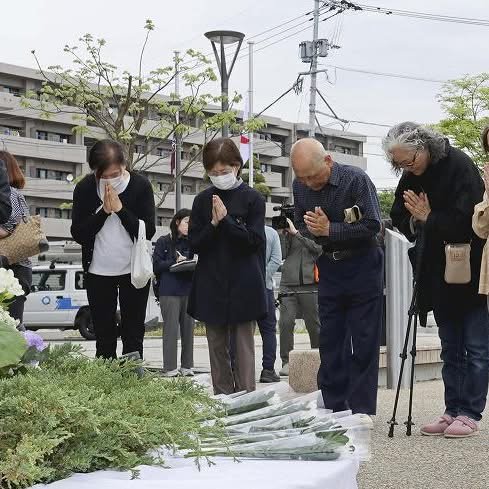
Kirk here with a news item. We just observed a minute of silence for the victims at my university. Kumamoto Earthquake Victims Remembered 10 Years On; Survivor Stresses Importance of Disaster Preparedness MASHIKI, Kumamoto — Tuesday marked 10 years since the first of the 2016 Kumamoto earthquakes. A flower offering stand was set up at a memorial park in front of Mashiki town hall in Kumamoto Prefecture, where bereaved families and others prayed for the souls of the victims.
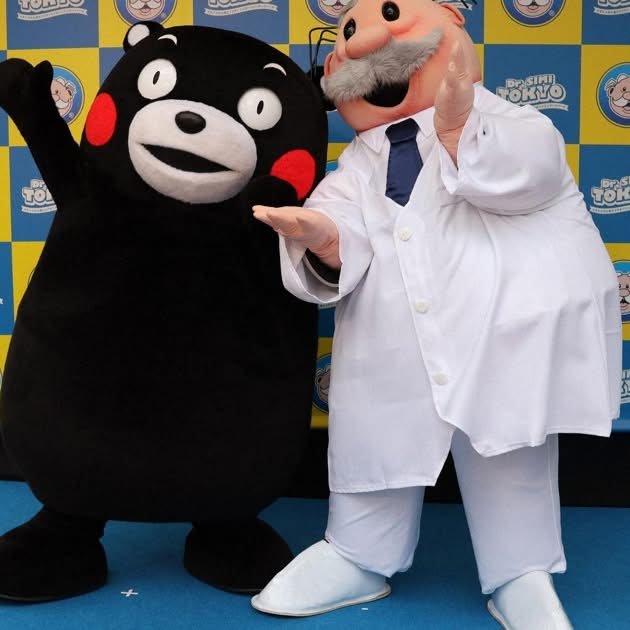
Kirk here with some mascot news. There are quite a few articles having to do with the 10th anniversary of the Kumamoto earthquakes that I need to share. I'll try to do that soon. Pop-up store of Mexico's iconic character Dr. Simi opens in Japan - The Mainichi TOKYO (Kyodo) -- A Japanese pop-up shop dedicated to Mexico's iconic, lab-coated cartoon mascot Dr. Simi opened on Monday, offering plushies and other
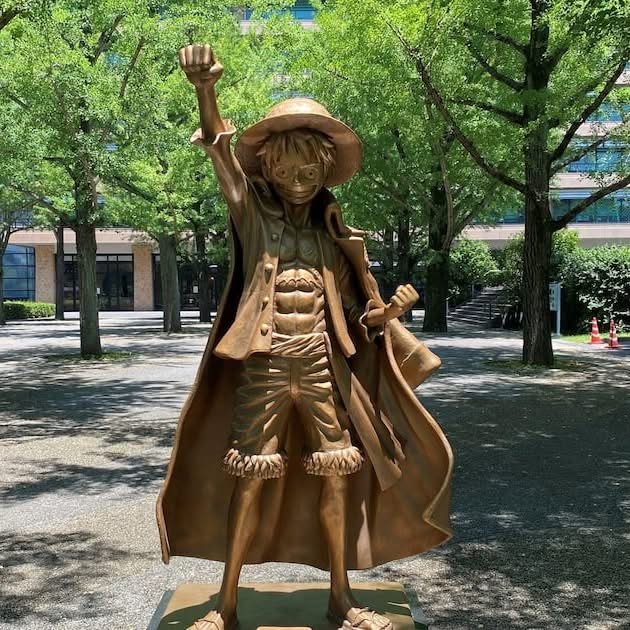
Kirk here. I've posted links to many articles about these statues over the years but this one taught me something about the connection to the quakes that I had either forgotten or missed entirely: --- start quote ---- The fact that *One Piece* statues were erected only in disaster-affected areas added a deeper meaning: a “pilgrimage to wounded lands.” Taking commemorative photos in front of the statues and sharing their stories became a ritual that echoed the manga’s theme of camaraderie—“never leaving anyone behind.” --- end quote --- One Piece Statues Spur Kumamoto Tourism Revival
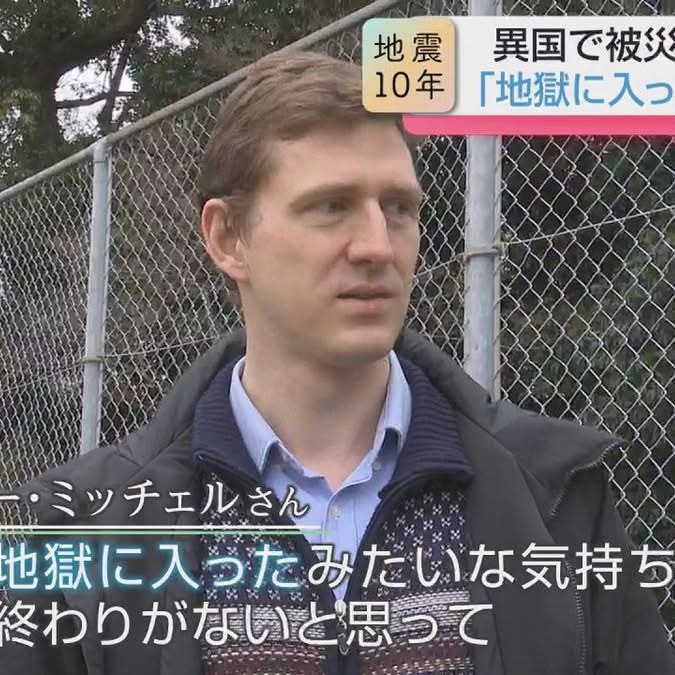
Kirk here with another news item (video) about Andrew Mitchell and how the earthquakes affect foreigners living in Kumamoto. --- start Claude translation --- "It Felt Like Entering Hell": What Do Foreign Residents Need During Disasters? Lessons from the Kumamoto Earthquake April 14, 2026, 17:00 "It felt like entering hell" One of the challenges that emerged when the Kumamoto Earthquake struck in 2016 was how to support foreign residents. Differences in language and culture made it difficult for assistance to reach them. We explore what will be needed when the next disaster strikes. Andrew Mitchell: "It's been ten years since I was last here. This is my first time back since the earthquake." Andrew Mitchell (41), originally from the United Kingdom, returned for the first time in about ten years to the university grounds where he took shelter during the Kumamoto Earthquake. Andrew Mitchell: "I felt like I had entered hell. I thought it would never end." How foreign disaster victims were treated The Kumamoto Earthquake brought two tremors of the maximum seismic intensity of 7. Andrew, who was an international student at the time, lived in Kumamoto City, where the main shock registered a strong 6 on the Japanese seismic scale. In his home country of Britain, earthquakes only occasionally reach intensity 2 or 3, so he had no idea what to do during a quake. A Japanese neighbor called out to him, and together they evacuated. Unable to sleep due to aftershocks Andrew Mitchell: "I would sit here, then lie down, but the aftershocks kept shaking us and I couldn't sleep at all. International students have no idea what to do when a disaster happens, and of course because our Japanese isn't very good, I was shocked at how hard it was to get information." When he arrived at the evacuation shelter, the signs and notices were all in Japanese, full of kanji. He couldn't understand where to get food or what he was supposed to do next. The following day, he evacuated to Miyazaki City, where he had an acquaintance, and was finally able to eat a proper meal. But... Andrew Mitchell: "I immediately thought of my friends still back in Kumamoto and felt guilty. They might still have no food. It was really painful." The gap between the situation of his friends still in Kumamoto and his own circumstances created a powerful sense of guilt. Even now, ten years later, he can't forget it. Other foreign residents faced different difficulties during the Kumamoto Earthquake. Marlo Suswahyu: "You can't eat the food at the evacuation shelters. That was the first problem." Near Kumamoto University is the Kumamoto Islamic Center. When prayer time comes, Muslims gather there. Marlo Suswahyu (50), who serves as the center's representative, sells halal ingredients and runs a restaurant. During the Kumamoto Earthquake, international students brought their troubles to him. Marlo Suswahyu: "On the first day, all we got was a 500-milliliter bottle of water and one biscuit shared between two people. But that biscuit contained pork, so Muslims couldn't eat it. So for about two days, none of us had any food." The issue was food. Muslims are forbidden from consuming alcohol or anything derived from pork. A few days later, relief supplies arrived from sources including the Indonesian Embassy, and Marlo wanted to share them with others, so he called an evacuation shelter. But... Marlo Suswahyu: "They told me, 'We don't need it. We're fine.' I think they were probably afraid of Islam. It made me a little sad." Still, as he continued his support efforts, people in the community gradually opened up to him. Marlo Suswahyu: "They were only afraid of me at first. Now there's no problem. We're all human beings, so I want to help together with them." Marlo came to believe that the fear of Muslims arose from "not knowing each other's cultures." After the earthquake, he has been actively communicating not only about countries and religions but also about how foreign residents should learn Japan's rules. Marlo Suswahyu: "For example, the rules about garbage, and the rules for riding bicycles have gotten stricter, so we teach each other these things." Foreign residents faced difficulties during the Kumamoto Earthquake when language and culture became barriers. Andrew, from the UK, has been sharing his own experiences through outreach activities since three months after the earthquake. What he has come to realize is that foreign residents can also help people in need. During the 2020 Kumamoto floods, he himself participated as a volunteer. He hopes for "mutual aid" that crosses national borders. Andrew Mitchell: "Don't just be a victim. Even if you don't understand Japanese, foreign residents can do many kinds of volunteer activities. Even without Japanese, gestures are something everyone understands. That's the message I want to share with both foreign residents and Japanese people." Last updated: April 14, 2026, 17:00 「避難所でビスケットも食べられず」災害時の外国人へ何が必要?熊本地震の教訓(2026年4月14日掲載)|KKT NEWS NNN 2016年、熊本地震が起きたときに課題の一つとなったのが外国人への対応です。言葉や文化が異なることから支援が届きづらい課題が浮き彫りに。この先に災害が起きたとき、何が必要かを探ります。
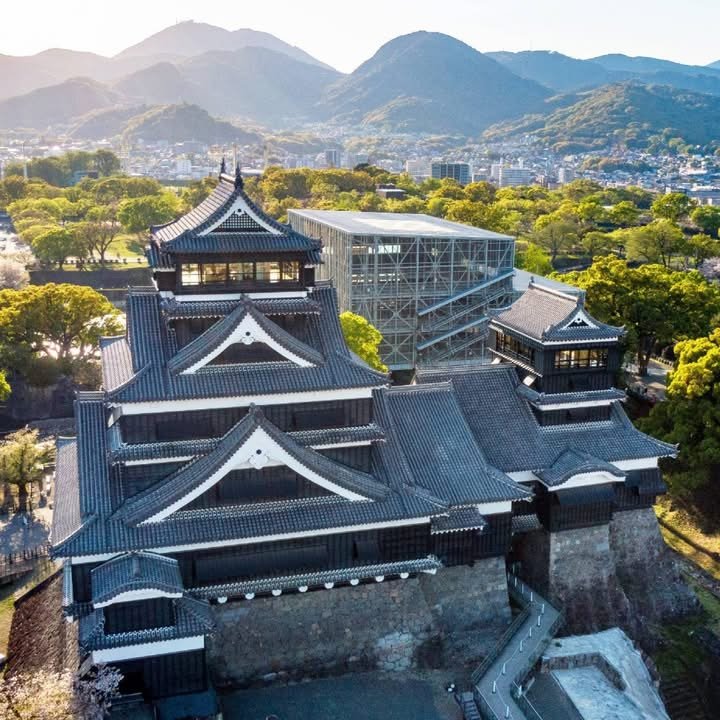
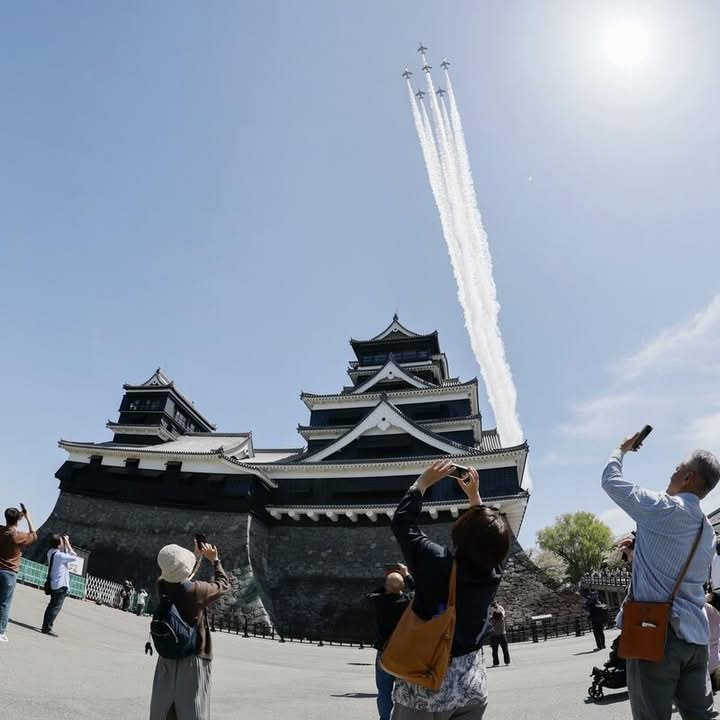
Kirk here with a Japan Times article about the restoration work on the castle. I think the article is basically fine but I'd like to add a footnote to this sentence: "The stone walls are expected to take longer to restore. Recognized as a national special historic site, they are characterized by mushagaeshi steep inclines at the top that make it difficult for enemies to climb over them." The word mushagaeshi (musha 武者 warrior; gaeshi [kaeshi] 返し causing to topple back) does imply that the walls were designed to be difficult to scale. However, as this quote from a very detailed webpage about the castle points out, the shape was primarily intended to make them more quake resistant. --- start quote --- This curved slope was designed by Kato Kiyomasa and, compared to vertical stone walls, has greater self-supporting strength and is also more resistant to earthquakes. In fact, during the 2016 Kumamoto earthquakes, while many stone walls collapsed, many of the stone walls dating from the Kato era remained intact. From atop the stone walls, visitors can overlook the entire castle, and the magnificent scenery captivates all who visit. --- end quote --- https://article.bespes-jt.com/en/article/kumamoto-castle/ https://www.japantimes.co.jp/news/2026/04/14/japan/society/japan-kumamoto-castle-restoration/ Kumamoto Castle restoration continues 10 years after quakes The initial aim was to complete reconstruction in fiscal 2037, but the goal was extended to fiscal 2052 due to the complexity of the work involved.
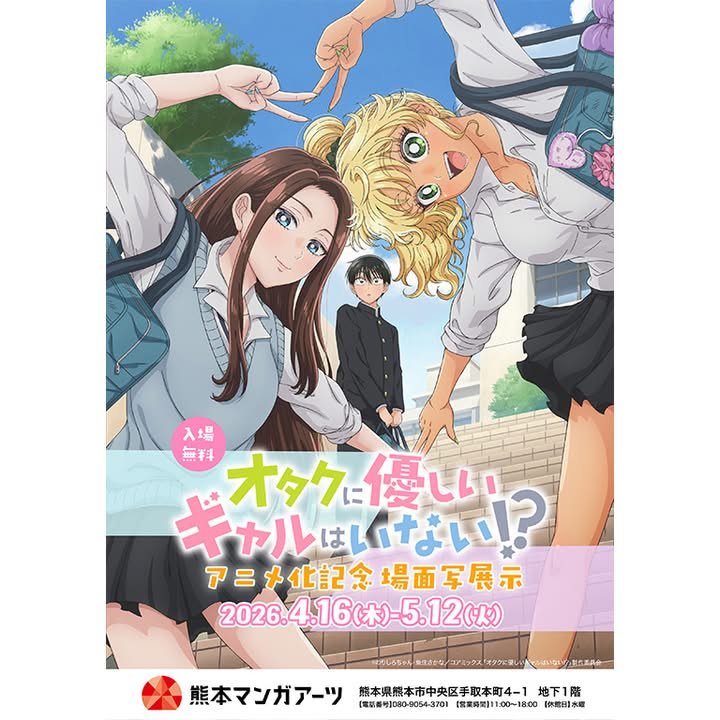
Kirk here. To be honest, not exactly my cup of tea, but for those of you who might be interested: An exhibition of still images from the anime adaptation of "Are There No Girls Who Are Kind to Otaku!?" is being held in Kumamoto! To commemorate the anime "There Are No Girls Who Are Kind to Otaku!?" currently airing on TV Asahi a
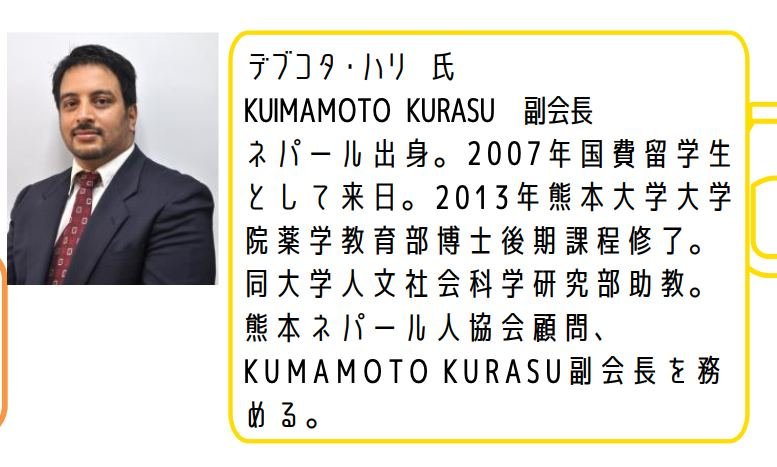
Kirk here. Today is the 10th anniversary of the first major earthquake of the series of quakes that hit Kumamoto in 2016. It registered 7, the highest level, on the Japanese seismic scale in Mashiki, Kumamoto. A symposium has been planned to discuss how those quakes impacted foreigners in Kumamoto and Kumamoto International's own Hari Devkota will be one of the speakers. The event will be in Japanese but here's an English translation of the webpage announcing it. P.S. Hi Hari! If you have time, please tell us a little about Kumamoto Kurasu. I found one web page but I still don't have a clear idea about the organization and how it works. I'm happy to see, though, that the organization's website links to this page. :) https://kumamotokurasu23.wixsite.com/kumamotokurasu/about-1 --- start Claude translation --- On April 14 and 16, 2016, we were struck by violent tremors of seismic intensity 7. At that time, there were foreign residents who evacuated while facing barriers of language and culture. Ten years have now passed. This symposium will begin by welcoming as guests foreign residents who experienced the harsh conditions of those days, those who rushed to provide support on the front lines, and newspaper reporters who observed the disaster area both as victims themselves and from an objective perspective — all sharing their stories about that day. This will be followed by a keynote lecture by Taro Tamura, Representative Director of the Diversity Research Institute and Reconstruction Promotion Advisor to the Reconstruction Agency, who has been active on the front lines of supporting foreign residents at disaster sites across Japan. The event concludes with a panel discussion exploring mutual community support (kyōjo) between local residents and foreign residents — three parts in all. "What if a major earthquake struck again tomorrow?" Let's start building, here and now, the kind of relationships where we can reach out and take the hand of the foreign resident living next door. Event Overview (Three-Part Format) Date: Sunday, April 19, 2026 (Reiwa 8), 2:00 PM – 5:00 PM Venue: Kumamoto City International Exchange Center Hall Capacity: 180 people Admission: Free Part 1: Looking Back on the Kumamoto Earthquake — Experiences During the Kumamoto Earthquake (2:00 PM – 2:40 PM) Presenters: 1. Naoki Watanabe, Head of Integrated Editorial Division, Kumamoto Nichinichi Shimbun 2. Tsutomu Higuchi, Representative Director, Kumamoto Disaster Volunteer Network NPO 3. Hari Devkota, Vice President, KUMAMOTO KURASU 4. Hiromitsu Yagi, Managing Director, Kumamoto City International Exchange and Promotion Foundation Part 2: Keynote Lecture (2:50 PM – 4:00 PM) "Large-Scale Disasters and Foreign Residents: A Bird's-Eye View of Community-Based Disaster Response from the Great Hanshin-Awaji Earthquake to the Noto Peninsula Earthquake" Speaker: Taro Tamura (Representative Director, Diversity Research Institute) Born in Itami City, Hyogo Prefecture. In response to the need to provide information to foreign residents affected by the Great Hanshin-Awaji Earthquake, he established the "Multicultural Coexistence Center" in 1995. After serving as a councilor at the Council of Local Authorities for International Relations and other positions, he founded the Diversity Research Institute in 2007. As Representative Director, he works to promote "consideration for human diversity" in corporations and local governments. Following the establishment of the Reconstruction Agency, he served as Senior Policy Research Officer and has concurrently served as Reconstruction Promotion Advisor since 2014. His co-authored works include Creating Work in a Town You Love, Multicultural Coexistence Keyword Dictionary, Municipal Policy and Universal Design, and The Great Hanshin Earthquake and Foreign Residents. Part 3: Panel Discussion — Making Foreign Residents Partners in Community Mutual Support (4:10 PM – 5:00 PM) Panelists: 1. Naoki Watanabe, Head of Integrated Editorial Division, Kumamoto Nichinichi Shimbun 2. Tsutomu Higuchi, Representative Director, Kumamoto Disaster Volunteer Network NPO 3. Hari Devkota, Vice President, KUMAMOTO KURASU 4. Hiromitsu Yagi, Managing Director, Kumamoto City International Exchange and Promotion Foundation Coordinator: Taro Tamura, Representative Director, Diversity Research Institute For more details, please see the flyer below. Kumamoto Earthquake 10th Anniversary Symposium Flyer (PDF: 527.9 KB) — Opens in a new window --- end Claude translation --- 熊本地震から10年シンポジウムを開催します https://www.kumamoto-if.or.jp/kiji0033582/index.html
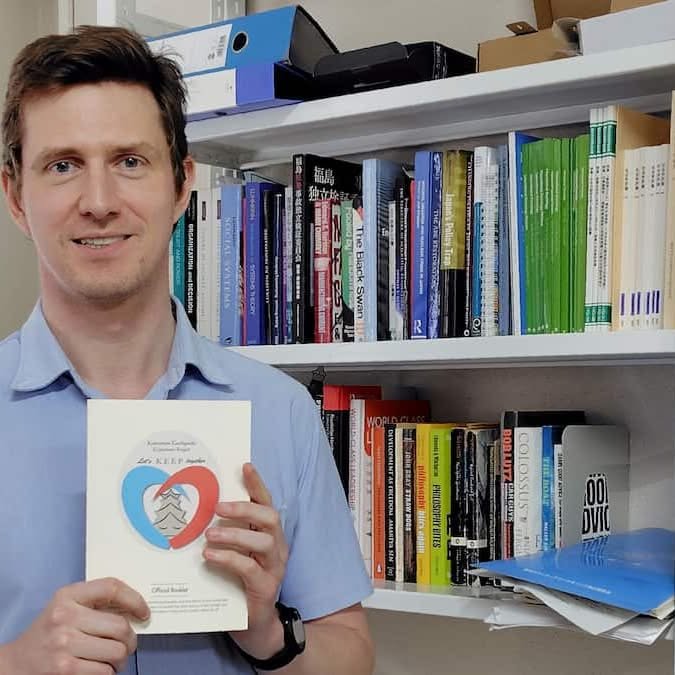
Kirk here with another news article about Andrew Mitchell. --- start Claude translation --- oreign Residents as Disaster Preparedness Contributors: Shifting from "Vulnerable" to "Active Participants" Through Multiculturalism — Local Government Support Has Its Limits — (Sankei Shimbun, April 11, 2026) As the number of foreign residents and inbound tourists in Japan continues to grow, questions are being raised about how to approach disaster preparedness given language barriers and cultural differences. Past disasters — including the 2016 Kumamoto earthquake — saw numerous cases of confusion among foreign nationals who could not understand disaster-related terminology. While local governments work to support affected foreign residents, smaller municipalities face limits in both staffing and budget. Experts are calling for a fundamental shift: rather than treating foreign residents as "disaster vulnerable," they should be recognized as active contributors to disaster preparedness, working together to get ready for the next crisis. --- BACKGROUND The 1995 Great Hanshin Earthquake claimed the lives of approximately 170 foreign nationals. Disaster relief information — including distribution of aid money and public housing applications — was released almost entirely in Japanese, leaving many evacuated foreign residents without adequate information. That experience spurred efforts to better support foreign nationals during disasters. More than 30 years later, the situation for foreign residents has changed dramatically. While Japan is accepting more foreign workers in response to serious labor shortages, the conditions that leave foreign nationals vulnerable during disasters have not significantly improved. --- LANGUAGE AND CULTURE: THE CORE CHALLENGE Associate Professor Akiyoshi Kikuchi (disaster sociology) at Meisei University, who specializes in community disaster preparedness for foreign residents, points to language and cultural differences as root causes. "There are cases where someone knows the word 'tsunami' but doesn't truly understand how dangerous it is," he says. It's not uncommon for foreign nationals to be unfamiliar with disasters or to lack knowledge of evacuation procedures — and simply translating Japanese into other languages is sometimes not enough to ensure appropriate action. When evacuation periods are prolonged, municipal involvement becomes critical — such as providing interpreters for administrative procedures — but the level of support varies significantly by region. --- GAPS IN MUNICIPAL PREPAREDNESS "Disaster Multilingual Support Centers" serve as hubs for assisting foreign nationals during large-scale disasters. These temporary organizations are established at the request of local governments during emergencies; they dispatch multilingual interpreters to evacuation shelters and provide translated disaster information as well as updates in plain Japanese. However, a 2024 survey by the Ministry of Internal Affairs and Communications found that of Japan's 47 prefectures and 1,741 municipalities, fewer than 10% — just 163 local governments — reported having systems in place to smoothly activate such centers during a disaster. Smaller municipalities tend to lag further behind. "In smaller municipalities, even when the need is understood, there are often limited human resources and no budget," Kikuchi observes. "National government support for personnel development and funding is essential." --- "MULTICULTURAL DISASTER PREPAREDNESS": A NEW APPROACH With the possibility of a massive Nankai Trough earthquake, a major Tokyo metropolitan earthquake, or other catastrophic events always looming, Kikuchi advocates for strengthening what he calls "multicultural disaster preparedness" (多文化防災). Rather than treating the growing foreign population as disaster-vulnerable, the idea is to position foreign residents as active contributors to community disaster preparedness and to build a genuinely inclusive society. According to Kikuchi, the number of foreign nationals joining local fire brigades is increasing. Moreover, issues such as language and cultural differences and religious taboos are matters that foreign residents living in Japan are uniquely positioned to understand. "It's important to help foreign nationals during a disaster, but we must never lose sight of the question of how we can help each other," Kikuchi said. "The real question is whether we can build those relationships before disaster strikes." --- A BRITISH SURVIVOR WHO FOUNDED AN ORGANIZATION Andrew Mitchell (41), a British-born specially appointed assistant professor at Kumamoto University, experienced the 2016 Kumamoto earthquake as a student and went on to co-found KEEP with fellow international students — a group dedicated to disaster preparedness for foreign nationals. "Many foreign nationals have never received disaster training in their home countries and tend to think, 'This doesn't concern me,'" he says. On the night of April 14, 2016, he was struck by violent shaking at his apartment in Kumamoto City. Terrified, he pulled a mattress over his head to protect himself. Two days later, during the "main quake," he evacuated to Kumamoto University with a Japanese student from the next room. The gymnasium was full, so they waited outside through the night. The difficulty of receiving information as a foreign national hit him hard. While he could manage everyday Japanese conversation, he recalls, "I didn't know where to evacuate, and I didn't even know the word for 'evacuation shelter.'" Rumors circulated online — such as reports that a nearby bridge had collapsed — and he remembers the anxiety of not knowing how to find accurate information. Nearly ten years after founding KEEP, Mitchell is active on social media and frequently serves as a lecturer at events hosted by municipalities and disaster preparedness organizations. He encourages international students and technical intern trainees to take everyday precautions — like carrying a mobile battery — and to participate in local disaster drills. With Japan's foreign resident population now exceeding 4 million and growing more diverse, Mitchell underscored the importance of building relationships where people can help each other even across language barriers. "By being prepared, you can protect your own life, the lives of your family, friends, and colleagues, and contribute to your community," he said. (Reported by Chika Yoshida and Akari Horiguchi) --- end Claude translation --- 外国人を防災担い手に 「多文化」強化で弱者から転換 自治体支援に限界 国内に住む外国人やインバウンド(訪日客)が増加する中、言語の壁や習慣の違いを踏まえた防災のあり方が問われている。平成28年の熊本地震を含め、過去の災害では防災…
Atsuko here,sharing my favorite Puppet theater in Kahoku town. ٩(ˊᗜˋ*)و♪ ーーーーーーーーーーーーーーーーーーーーーーー Pierrock Troupe 🎪 Puppet Theater & Toy Factory 🏭 We are happy to announce that we will now be open every other weekend (Saturday & Sunday) each month ☺️❣️✨ Our next performance & workshop will be: April 25 (Sat) & April 26 (Sun) ☺️✨ Schedule: 1:00 PM – Puppet Theater Performance (about 40 minutes) 2:00 PM – Marionette-Making Workshop (about 2 hours) You are welcome to join either one or both! If you’re interested, please make a reservation via Facebook or Instagram message 🙇✨⭐️ Admission: Adults: 1,300 yen ✨ Children: 500 yen ✨ Workshop Fee: One marionette: 3,300 yen ✨ For those who want to fill their hearts with dreams, fantasy, and imagination 🌈✨ we highly recommend the performance. For those who want to bring their imagination to life from the universe within themselves ✨ we recommend the workshop ☺️❣️✨ ーーーーーーーーーーーーーーーーーーーーーー We aim to create a place where people from all over Japan 🗾 and the world 🌏, who carry a childlike spirit, can gather and connect ❣️✨🙇⭐️ At Pierrot Troupe Puppet Theater 🎪 & Toy Factory 🏭, we will continue to create and share many wonderful fantasies ❣️ We sincerely look forward to welcoming you ☺️
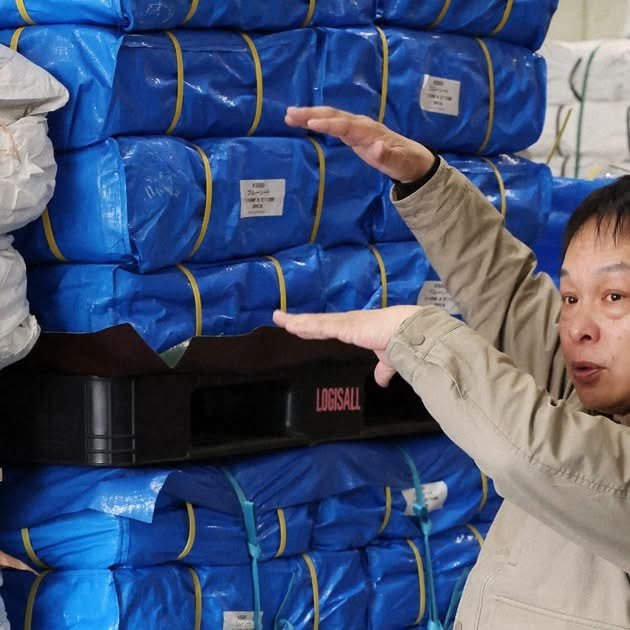
A notable consequence of the quakes was that stores quickly ran out of food. With the roads and railroads damaged, it was up to the SDF to bring in food. Inspired by this, a man has developed an instant meal that requires neither water nor cooking and can be stored for up to three years. Read about it here: - William Fukuoka materials firm develops ready-to-eat risotto inspired by Kumamoto quake relief - The Mainichi FUKUOKA -- For people enduring harsh conditions in disaster shelters, access to satisfying food is vital. Yet few households in Japan maintain adequat
Kirk here. Here's something related to the upcoming earthquake anniversary. Kumamoto Castle hosts panel exhibition marking 10 years since quakes A panel exhibition opened Saturday in front of Kumamoto Castle to mark 10 years since a pair of major earthquakes hit the southwestern Japanese prefecture of Kumamoto, highlighting the efforts of craftsmen and city workers to repair damage to the structure.
From the book club , this message seems to have gotten overlooked , but here it is , hopefully better late than never: Annnnnnd, another Book Club post It's me again Kuma Friends, your friendly neighborhood book club leader (Megan)! This month, Kumabon is reading “Wade in the Water” by Nyani Nkrumah. The discussion will be at a restaurant downtown (we're hoping for Happy Hour at Ni no Ni!) on Saturday, April 25th at 5:30 pm. If you're interested, please use the QR code to join our Line group and get more information. As always, even if you haven’t finished the book (or maybe haven’t even started it yet!), join us anyways as we’re a close group that loves to chat. Books for the months of May-September will be announced in the Line group as well, so even if this book doesn't interest you, maybe the next one will! Hope to see you there!
Joe Tomei here. I'm in the process of reducing my library and in doing that, support the Tonokai project. Here's the details I've started on an online catalogue here https://www.librarything.com/catalog/eibeigakka/allcollections and if you see a book that you are interested in, please let me know. I'm going to ask for ¥100 (or more if you want to donate more) for each book, which will go to the Tonoka project. I'm planning on organizing one evening a month for the book swap, which I hope will take place at the end of the month at Kumamoto Gakuen University, though I'm still negotiating about that. I'm still in the process of getting all the books up, and after that, I hope to start tagging them, so I'll post periodic updates. Thanks in advance!!!