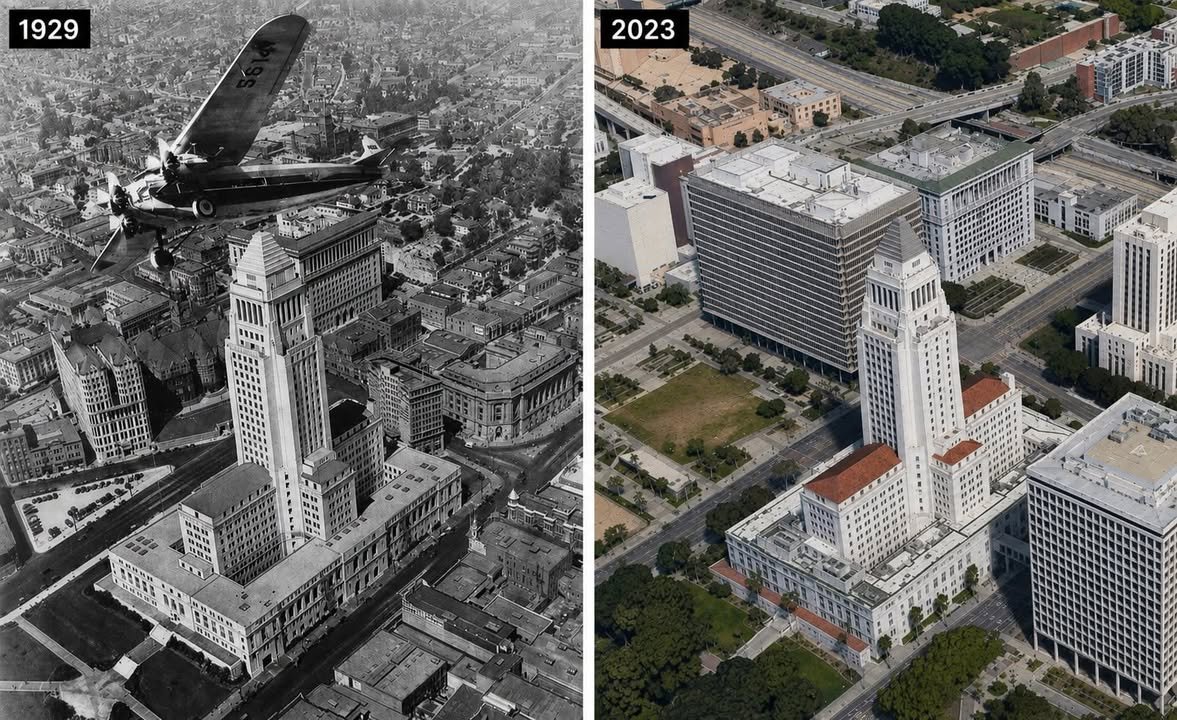
Los Angeles City Hall. And yet they are replacing Kumamoto City Hall.
2026-08-20 15:00 JST 2026 Los Angeles City Hall. And yet they are replacing Kumamoto City Hall. ↗ View original post on Facebook For a link to the original post on Facebook, open this page on a computer. Reactions: 3 · Comments: 2 ← 2026-08-20 08:55 JST 2026-08-21 10:32 JST → Around this time … 2026-08-24 10:33 JSTI suspect that the person who wrote this article didn't ask many foreigners where they get their information. I was amazed recently to discover how large and active Vietnamese-language Facebook groups about Kumamoto are. I think Vietnamese people are getting most of their information from each other, not directly from the government. And, of course, this page, Kuma Visit, and other volunteer efforts might be mentioned in an article of this kind. :(--- start quote ---The Kumamoto city government started an emergency email service for foreigners based on lessons learned from the major quakes that struck the prefecture 10 years ago, when many foreigners were unable to receive the support they needed.--- end quote ---I get an email newsletter from the International Center and occasionally share the contents on this page. To be honest, though, I've been somewhat underwhelmed by both the quantity and the quality of the information. Does anybody know about an email newsletter that comes directly from the city government?I'm aware of LINE being translated into English but this too has many problems. One is that information shared on LINE cannot be shared easily outside of LINE; it's a walled-off garden.I agree with the basic premise of the article: There's lots of room for improvement. I would say, however, that improvement should start with better analysis than this article provides of the current situation and its deficiencies.-- KirkMany foreigners have hard time obtaining disaster info in Kumamoto quake - The Mainichi 2026-08-23 07:44 JSTKirk here. After over 25 years of providing, or attempting to provide information in English for the benefit of folks in Kumamoto who may not be fluent in Japanese, I've come, ironically, to be concerned about how the usefulness of Japanese to foreigners is often discounted. A recent example was my August 13 post about Kumamoto City presenting translations without links to the original (more detailed and informative) Japanese and without internal glossing of the original Japanese terms that they translate (without such glossing we foreigners are forced to struggle to "back translate" when trying to communicate with actual Japanese people about the content we read).Here's that post:https://www.facebook.com/1379708514190936/posts/1484195123742274To their credit, the City responded to my email and added a link to the original Japanese (but the pdfs are still unglossed; you have to go to the original Japanese documents to find the key terms).At any rate, since this "foreigners only need translations; have no need to use Japanese" stereotype is a pet peeve of mine, I've been particularly pleased to observe the rise of the yasashii (easy) Japanese movement, including the fine work described in this article.'Easy Japanese' Helps Foreign Residents Access Vital Information | JAPAN Forward 2026-08-22 16:23 JST--- quote from article ---A refuge for foreignersMany Filipinos and Vietnamese came to the damaged church one after another, seeking practical help and trying to reconnect with their community after the earthquake.Hebie May Reyes, 27, a tomato farmer who has lived in Yatsushiro for four years, said she went to the church's distribution site to get rice, water, tissues and wipes.It was a big help to us, she told UCA News.Reyes regularly attends Mass on Sundays with other Filipino Catholics.--- end quote ---KirkQuake-damaged church becomes focus of disaster response in Japan’s Kumamoto - UCA News 2026-08-21 22:14 JSTThis is certainly very bad news for the tourist industry. On the more positive side, an article about new flights between Jeju and Kumamoto was also in my feed today. If you are interested, check out both. -- Kirk https://www.travelandtourworld.com/news/article/om6xgcbbzmxn/https://mainichi.jp/english/articles/20260821/p2g/00m/0na/002000cSouthwestern Japan hotels see 174,000 cancellations after Kumamoto quake - The Mainichi 2026-08-21 10:32 JSTKirk here with another positive story about foreigners pitching in to help.--- start Chat GPT translation ---[Ogori, Fukuoka] Foreign Technical Intern Trainees at Kyushu Kokusai Gakuin Take the Lead in Delivering Relief Supplies to Areas Affected by the 2026 Kumamoto EarthquakeAugust 20, 2026, 7:30 p.m. — Straight PressPhoto taken at one of the facilities receiving assistanceKyushu Kokusai Gakuin (九州国際学院), operated by RPJ Co., Ltd. (株式会社RPJ) in Fukuoka, carried out a relief-supply effort for areas of Kumamoto Prefecture affected by the earthquake, led primarily by foreign technical intern trainees currently undergoing training at the school.Relief effort motivated by a desire to support disaster victims and senior traineesPhoto taken at a company receiving assistanceFor this relief effort, arrangements were made in advance with companies employing graduates of Kyushu Kokusai Gakuin and facilities serving as distribution points for relief supplies. Supplies were delivered to three locations. A total of 18 people participated that day, representing the students of Kyushu Kokusai Gakuin, including technical intern trainees from Vietnam, Indonesia, the Philippines, and Nepal.Photo taken at a nursery school receiving assistanceTrainees form a line to carry relief suppliesWanting to help disaster victims and others living in the affected areas, they delivered water, daily necessities, and other items needed locally. The participating trainees actively helped bring in and transport the supplies, carefully carrying the relief goods one item at a time.Trainees form a line to carry relief suppliesTrainees load supplies onto a cartSome of the participating technical intern trainees experienced the earthquake almost immediately after entering Japan. They said that, just as they were beginning life in an unfamiliar country, they felt the powerful shaking and were frightened and anxious. Even so, they asked themselves, “Is there anything we can do for the people affected by the disaster?” That desire led them to take part in this relief effort.Photo with graduates of Kyushu Kokusai Gakuin currently working as trainees in Kumamoto (from left: trainee, Mr. Noguchi, trainee, Mr. Egashira)Kumamoto Prefecture is also home to more senior trainees who came to Japan from the same countries—Vietnam, Indonesia, the Philippines, and Nepal—and who have already been working hard to build their lives in Japan. The desire to “help, even in some small way, if senior trainees from our own countries who are working hard in Japan are in trouble” was another motivation behind the relief effort.Kyushu Kokusai Gakuin plans to continue doing what it can while monitoring conditions in the affected areas and determining what kinds of support are needed.A relief effort conceived and carried out by the technical intern trainees themselvesVietnamese trainee Nguyen Duc Thanh commented in an interview after the relief effort:“There was an earthquake soon after I came to Japan, and I was very frightened. I still wasn’t used to life in Japan, but I wondered whether there was anything I could do for people who were having difficulties, so I decided to take part in this relief effort.”Indonesian trainee Abdul Rohman said:“There are senior trainees from my country in Kumamoto who came to Japan before us and have been working hard here. I wanted to help those senior trainees and people in the local community who are having difficulties, even if only a little. I’m glad I was able to participate in delivering the supplies.”Mizuki Noguchi, a director of RPJ, commented:“This relief-supply effort was not something that we at RPJ Co., Ltd. initiated. The technical intern trainees themselves thought, ‘Is there anything we can do for the people affected by the disaster?’ and took action on their own. At present, crimes involving foreign nationals sometimes receive a great deal of attention. But we hope that more people will also become aware that there are foreign nationals in Japan who study and work very hard and who want to take action to help people and communities in need.”Kei Egashira, also a director of RPJ, added:“For this effort, we provided support with things the trainees could not handle entirely on their own, such as preparing and transporting supplies and coordinating with the organizations involved. We are extremely pleased and encouraged that the trainees thought for themselves and acted to help others across national boundaries. We intend to continue respecting their wishes and supporting the activities that are needed.”Kyushu Kokusai Gakuin places importance not only on teaching Japanese and the knowledge students need for work, but also on fostering ties with the local community and encouraging a spirit of compassion that leads people to take action for those in need. Its future efforts to remain attentive to the circumstances of disaster victims and affected communities will also be worth watching.Kyushu Kokusai Gakuin official website:https://kyushukokusai.com(ASANO)Note: I have rendered 九州国際学院 as “Kyushu Kokusai Gakuin” rather than presenting “Kyushu International Academy” or another naturalized translation as an official English name.--- end translation ---https://getnews.jp/archives/3738226【福岡県小郡市】九州国際学院、外国人技能実習生が主体となり令和8年熊本地震の被災地へ物資支援実施|ガジェット通信 GetNews 2026-08-20 15:00 JSTLos Angeles City Hall. And yet they are replacing Kumamoto … (this post) 2026-08-20 08:55 JSTKirk here with an example of your tax yen at work producing extremely odd English (and placing it prominently on the website of the Prime Minister, for the world to see). The original Japanese title of the announcement you see is 熊本県知事等による要望書手交 (https://www.kantei.go.jp/jp/105/actions/202608/18shukou.html). Here are some (but not all) of ChatGPT's criticisms of this translation.--- quote from ChatGPT, slightly modified ---1. “Caption” clearly does not belong in the title.There is nothing corresponding to “Caption” in the Japanese title. Moreover, immediately below the photograph on the English page is an actual photo caption: “Prime Minister Takaichi receiving a written request (1).” This strongly suggests that “Caption” is a stray field label or other artifact of the English publishing workflow that somehow became attached to the title.2. “Handing Over of Requests” is extremely unnatural English.手交 (shuko) is formal bureaucratic Japanese meaning the physical presentation or delivery of a document. 要望書 (yobosho) is a written request or request document. Translating the combination mechanically as “Handing Over of Requests” produces something that an English-language government office would be very unlikely to use as a headline. Something like “Prime Minister Takaichi Receives Written Request from Kumamoto Governor and Others” would be much more natural.3. “Requests” is misleading.要望書 is a single document — literally a “written request.” The document may contain several individual requests, but the Japanese headline refers to the presentation of the 要望書 itself. “Handing Over of Requests” makes it sound as though a number of separate requests are being transferred. The event itself was very simple: Kumamoto Governor Takashi Kimura and others met Prime Minister Takaichi and presented her with a written request. Ironically, the English photo caption — “Prime Minister Takaichi receiving a written request” — communicates the event much more clearly than the English headline does.--- end quote ---Now to the question of how this happened. I asked ChatGPT if this is most likely to have been the work of AI (or some form of machine translation) or humans working for the government.--- start ChatGPT's analysis ---The evidence points more toward a longstanding human/institutional translation process than toward a modern AI simply being asked to translate this Japanese title from scratch.The strongest clue is that the awkward phrase “Handing Over of Requests from the Governor of ... Prefecture and Others” has appeared on English Kantei pages for years. In other words, this does not look like a new translation generated specifically for this article. It looks more like an established government translation, perhaps preserved in a style guide, translation memory, database, or previous-page template and repeatedly reused.That kind of consistency is very characteristic of institutional translation. Once an English equivalent has been adopted for a bureaucratic Japanese expression such as 要望書手交, later translators may continue using it even if the English sounds unnatural.The stray word “Caption” appears to be a different kind of mistake. There is nothing in the Japanese title that could reasonably have been translated as “Caption,” and the page actually does contain a photo caption immediately below the image. That makes “Caption” look much more like a publishing, template, or content-management-system error in which a field label somehow became attached to the headline.AI or machine translation could conceivably be involved somewhere in the government's current workflow, so this cannot be proved from the finished page alone. But the historical reuse of the awkward translation, combined with what looks like a separate publishing error involving “Caption,” makes a longstanding human/institutional process the more likely explanation than a modern AI independently producing the whole thing.--- end ChatGPT's analysis ---I think this is a good example of why humans working in languages they don't understand well (or, at least, are not native speakers of) should use AI to check their work. I don't mean that they should just throw Japanese text at an AI bot and go with whatever it produces. That would be irresponsible. But, in an age where high-quality AI is available, not getting a "second opinion" from AI and blithely following bureaucratic precedent when producing translations strikes me as equally irresponsible.The URL of the English article is https://japan.kantei.go.jp/105/actions/202608/18shukou.html. 2026-08-19 17:09 JSTI think this short video, from the New York Times, about the situation in Kumamoto is well done but one part is misleading. It shows the collapse of the Oaso Bridge in 2016 and then implies that lessons learned from that tragedy led to improvements that helped prevent the complete collapse of the Myoken No. 1 Bridge in Yatsushiro. However, the Yatsushiro bridge was built long before 2016. I'm planning to write about that in another post. -- KirkVideo: How Japan Averted a Major Earthquake Disaster 2026-08-19 08:09 JST"The quake damaged 31,951 houses, including 1,449 that were completely destroyed." See NHK's video report for more. -- KirkThree weeks after Kumamoto quake, thousands of evacuees remain in shelters | NHK WORLD-JAPAN News 2026-08-19 08:02 JSTKirk here. The headline of this article is extremely misleading but there is at least a grain of truth to the story. Here's ChatGPT's account, with citations I have checked out, of what aspects of the story check out and what is overblown. --- start quote --- There is a verifiable basis for the story, but it is considerably narrower than the SCMP headline suggests.First, on August 3, the town of Misato issued an official warning saying that a group of three suspicious people wearing camouflage clothing had been seen within the Uki police jurisdiction. The notice explained some ways residents could distinguish actual SDF personnel and advised people to contact the police or town office if suspicious. Importantly, however, the notice does NOT say that these people stole anything, that they had entered homes, or even that it had been established that they were pretending to be SDF personnel.https://kumamoto-misato-town.site2.ktaiwork.jp/?p=88On August 7, FNN reported residents' accounts of people dressed like SDF personnel looking into damaged homes and attempting to enter. One person said that when someone asked to take their photograph, the suspicious people left. This is stronger evidence for the "fake SDF" story, although it is still based on residents' reports rather than suspects who have been identified by police.The same FNN report says that four or five theft cases involving such things as jewelry and outdoor air-conditioning units had occurred within the Uki Police Station jurisdiction. But these are presented as a separate problem. FNN does NOT say that the camouflage-clad people committed those thefts.https://www.fnn.jp/articles/-/1090712There is no question that earthquake-related theft itself is real. For example, police arrested a 47-year-old man on August 8 for allegedly stealing an outdoor air-conditioning unit from a house in Kami-Amakusa while the resident was staying elsewhere because of the earthquake. But I have found nothing connecting that suspect with the camouflage-clad people.https://kumanichi.com/articles/2023485As recently as August 18, a Japanese article examining the "fake SDF" reports stated explicitly that their purpose was unknown: 「現状、目的は不明」. It said that there was concern that they MIGHT be contemplating crimes against disaster victims — not that this had been established.https://www.ben54.jp/news/3816That brings us to what the SCMP journalist himself actually established. He contacted the Kumamoto prefectural government, and spokeswoman Akino Sonoda confirmed that the prefecture had RECEIVED REPORTS about supposed fake SDF personnel and that the police were aware of the reports. But she also said that the prefecture did not know how many reports there were or even which towns were involved.In other words, the SCMP's own investigation independently confirms the EXISTENCE OF REPORTS. It does not independently establish that the people reported were actually impersonating SDF personnel, still less that they were looters.The other local person interviewed by SCMP, Kiyoko Date, was not presented as an eyewitness either. She said, "I heard the reports," and said that police were patrolling the area.I have also found no Japanese report, as of August 19, that any of the camouflage-clad people have been identified or arrested, or that police have linked any of them to an actual theft.That is why the SCMP headline — "Fake troops loot earthquake-hit homes in Japan's Kumamoto" — goes well beyond the evidence. Its opening sentence similarly says that the men are prowling communities "to loot abandoned homes and businesses." Neither the Japanese reports I have found nor the evidence described in SCMP's own article establishes that.What appears to be true is more limited: suspicious people wearing camouflage and/or appearing to be SDF personnel have been reported around damaged homes; authorities have taken the reports seriously enough to warn residents; and, separately, genuine thefts have occurred in earthquake-affected areas. What has NOT been established is the crucial connection asserted by the headline — that the supposed fake SDF personnel are the people committing the thefts.--- end quote --- https://www.scmp.com/week-asia/health-environment/article/3364410/fake-troops-loot-earthquake-hit-homes-japans-kumamoto P.S. My hypothesis about what happened: Julian Ryall, the author based in Yokohama, wrote a reasonable, carefully sourced draft, and some editor at the South China Morning Post slapped on a sensationalist headline and opening sentence. I have no proof of this other than that the headline and first sentence seem strikingly different in tone and certainty from the rest of the article.‘It’s really terrible’: fake troops loot homes after Japan earthquake 2026-08-18 21:43 JSTIt was a close game, with both teams tied 0-0 until the bottom of the 9th. Then Kendai Takasaki scored a "sayonara" run. But, Ariake was no pushover; they did remarkably well considering that it was their first time to play in the Koshien tournament. -- Kirk有明、サヨナラ負けで4強ならず エ―ス斉藤の129球熱投に甲子園喝采…被災地に届け続けた勇気